🪰 Duolingo: How A Toxic Little Owl Destroyed Language Learning
THE BUZZ
- The streak became more important than speaking
- Duolingo mastered addiction before conversation
- Language was never meant to be solo
That Damn Owl Is Very Good at His Job
Duolingo figured out something incredibly powerful about human beings.
We hate losing.
Give us a little number that goes up every day, convince us that number represents our discipline, progress, intelligence, and general worth as a functioning adult, and suddenly we’ll crawl out of bed at 11:57 p.m. to translate the turtle eats bread because there is no way in hell we’re losing our 384-day streak tonight.
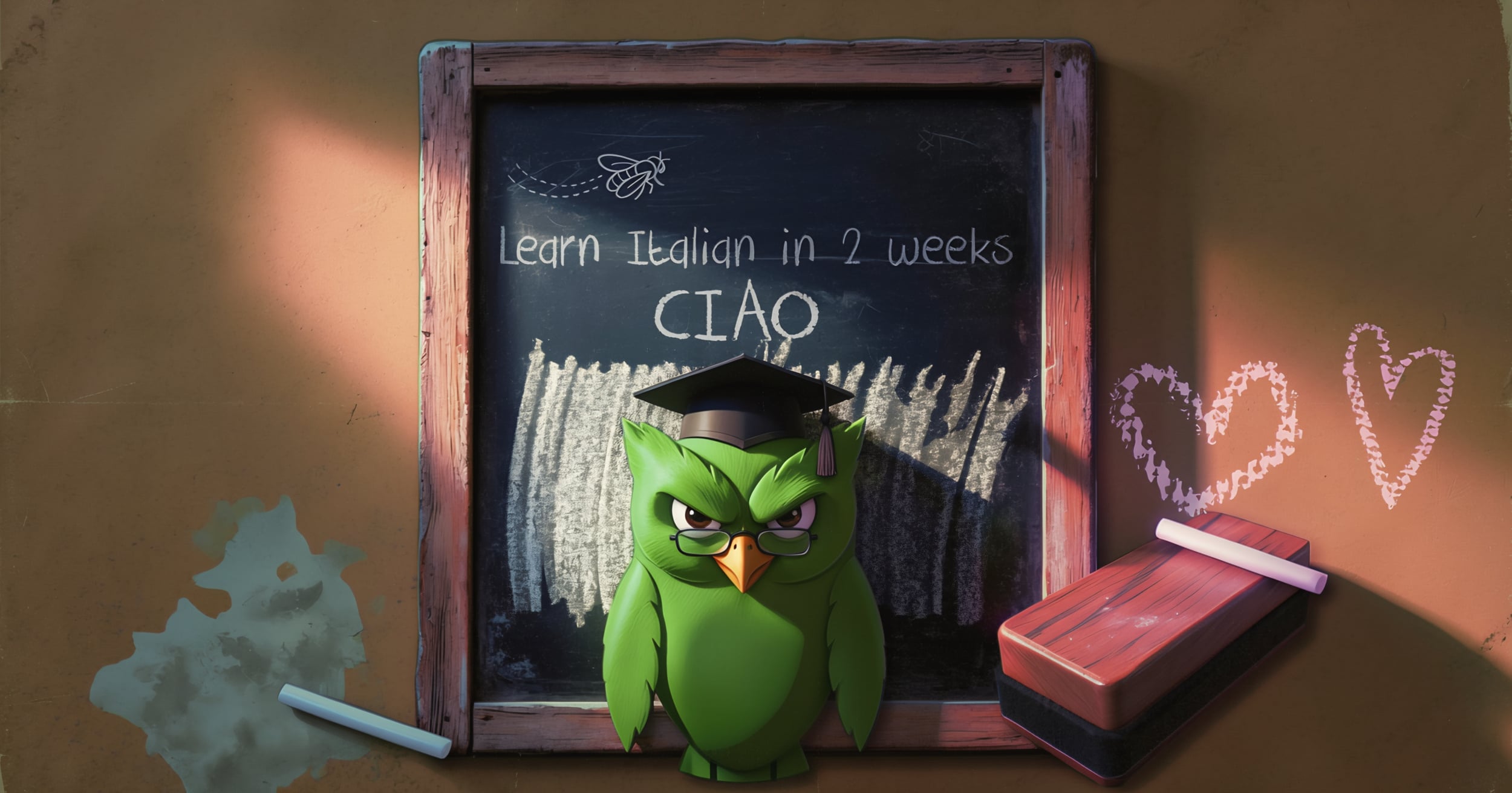
And waiting there for us is that little green owl… judging and nudging us like a passive-aggressive jerk.
And don’t get me started on how that little goblin behaves like an emotionally unstable ex who noticed we haven’t texted back in a while.
It’s funny because Duolingo is in on the joke. The company leaned into the increasingly unhinged personality of its mascot until Duo became almost as famous for threatening your family over a missed Spanish lesson as he was for actually teaching Spanish.
That joke worked because underneath it was something very real: Duolingo became absurdly good at getting people to come back.
Streaks, leaderboards, points, hearts, notifications, progress bars, and little bursts of digital celebrations transformed language studied into something a game you could win.
There was just one really big problem.
Winning Duolingo and learning another language are two totally different things.
And once you notice the game the developers are playing, that little green empire starts looking like a giant grift.
When the Scoreboard Becomes the Point
And that’s what hooked me about this video…
It’s not saying that Duolingo teaches absolutely nothing, because that would be silly. Plenty of people pick up vocabulary, grammar patterns, reading skills, and useful basics from it.
The more interesting part of this story is that the machinery designed to keep you learning may actually be stronger than the learning itself.
Duolingo discovered that people were obsessed with maintaining their streaks. Missing a day didn’t just mean skipping practice. It meant breaking this little promise you’d been keeping with yourself (and that bastard owl) for weeks, months, or even years.
And honestly, that’s incredibly effective behavioral design.
It can also create a bizarre situation where somebody becomes better at protecting a language-learning streak than actually learning the language.
People start choosing easier lessons because they’re tired or because it’s 11:56 p.m. and they just need to squeeze something in before midnight so the streak survives. They chase points, protect rankings, and eventually that little number beside the flame becomes the accomplishment. Who cares if they can’t say “How are you?” in German? They’re #5 on the leaderboard, suckers.
And when you plop that same person across the table from an actual human being speaking German at a normal speed, that glorious 600-day streak suddenly has absolutely nothing to say for itself.
That gap between doing the app and speaking the language is where everything gets super fuzzy.
Because Duolingo didn’t accidentally build a habit machine… it got extremely, extremely good at it.
And once the business side of that machine became enormous, there were very powerful reasons to keep feeding the thing it could easily measure: people coming back.
You Can Have a 2,000-Day Streak and Still Freeze
There’s one part of that story I can’t stop thinking about… how somebody can show up every single day for years and still feel helpless when another person starts talking in this new language.
That sounds crazy until you realize what they’ve actually been practicing…
Because recognizing the right answer isn’t the same mental task as reaching into your own head and finding the words. Choosing between four translations doesn’t feel anything like having somebody standing in front of you waiting for an answer. Completing a familiar exercise inside an app gives you context, hints, and a predictable little world, but real conversation doesn’t give a damn about all that crap.
People mumble and interrupt themselves, and they use words you’ve never heard. Somebody makes a joke, another guy talks too fast, and meanwhile you’re panicking and forget a simple word you knew yesterday.
Suddenly language isn’t a puzzle or a game. It’s alive.
And this is where I think we’ve misunderstood the whole shebang.
Language Was Never Supposed to Be a Solo Sport
The reason language exists is because human beings wanted to communicate with one another.
And sure, all of that can be useful. I use tech constantly, and having an endlessly patient little green owl explain some bizarre grammar rule for the fifth time can be genuinely great.
But there’s still one thing machines can’t fully recreate, and I think it matters more than we admit: the feeling of trying to make yourself understood by another person.
That changes the experience, totally. When you’re talking to someone and struggling for a word, they can see it happening in real time. Maybe they slow down and give you a clue. Maybe they realize you keep making the same mistake and explain it in a completely different way because the first explanation wasn’t landing.
But most importantly, there’s an emotional payoff when it all clicks into place and the other person actually understands you. That moment is ridiculously motivating. Trust me, it means a helluva lot more than some animated treasure chest popping open on your phone.
An Algorithm Knows Your Mistakes. A Person Knows You.
There’s another difference that gets buried when language learning becomes purely digital.
Good teaching is personal. Two people can be studying exactly the same language and need completely different things from it.
Someone planning to spend a month eating their way through Italy probably doesn’t desperately need a course about corporate presentations. A person learning English because they’re moving to London for work would need that lesson desperately.
Sure, software can personalize some of that, and down the road AI will get better at it too. But real teaching has thousands of tiny adjustments that happen because another human being is watching you think. A teacher can see when you’re bored or pretending to understand something because you’d rather die than ask them to explain it a third time. They remember what makes you laugh, what subjects get you yapping, and what weird little mental trick finally made that impossible grammar rule stick.
But most importantly, somebody notices when you stop showing up.
Of course, that freaking owl notices too, of course, but there’s a
Duolingo May Have Gamified the Wrong Thing
This is why I think the Duolingo story is so interesting.
Gamification isn’t always bad.
Yes, I said it, and here’s why… because getting somebody to practice every day is useful. Turning boring repetition into something people actually want to do is a good thing. If the goofy owl gets someone off TikTok for ten minutes and into a French lesson, I’m certainly not going to call the cops.
But the trouble starts when the measurement replaces the mission. A streak is easy to count, but language fluency is really messy.
You can easily measure whether somebody opened an app today. It’s a lot harder to measure whether they can walk into a café in Warsaw, stumble through an exchange with the waiter, recover when they get something wrong, and still leave with the coffee they ordered.
I’m sure you can figure out which measurement software companies prefer tracking. That’s how you end up with people accumulating enormous streaks while still feeling terrified of an everyday conversation.
The app successfully taught them to keep playing the app.
Then Duolingo Tried to Remove Even More Humans
The next part is inevitable…
Once a company becomes obsessed with scale, efficiency, and producing more content faster, AI is the next irresistible step.
Why do you need humans painstakingly building everything when AI can generate enormous amounts of material in a fraction of the time? Duolingo pushed hard in that direction, quickly expanding courses while boasting about becoming an AI-first company.
But users started noticing the difference between human hands and AI. Lessons had more errors, awkward phrasing, and sentences that didn’t sound like anything a real person would actually say.
That’s a particularly nasty problem for a language app. If your whole job is teaching people how humans communicate, unnatural language undercuts the entire point of the product.
Eventually, Duolingo backed away from some of the big “AI-first” bravado and started putting more emphasis on teaching better. But by then, AI had created a whole new problem for the app… it was getting pretty damn good at talking back.
People could suddenly use AI to practice something much closer to an actual conversation. So while Duolingo was using AI to crank out more lessons, AI was making those endless lessons unimportant.
Which leaves that little green owl perched there, clutching the one thing Duolingo may have perfected better than anyone else: the habit.
Maybe We’ve Been Practicing the Wrong Thing
I don’t think Duolingo ruined language learning because it made learning fun. The fun was the best part. The mistake was teaching millions of people to confuse showing up and practicing with actually being able to communicate in another language.
Eventually, another human being has to enter the chat, and that’s when all the little cracks show. Maybe you stumble or misunderstand something, but you keep going, find another way to say what you mean, and somehow make yourself understood. That awkward, messy exchange is where the real learning happens, not on a leaderboard or under the judgmental stare of a cartoon owl.
THE LANDING
A language doesn’t become yours until another human being understands you.
STAY CURIOUS
Three more stories worth your curiosity.






Post Comment