🪰 How The Internet is Designed to Keep Us Constantly Fighting

THE BUZZ
- Harmless posts now become instant battlegrounds.
- Somebody will always take it personally.
- Insecurity loves a comment section.
It Was Just a Pantry
It always starts this way: a woman posts a TikTok video of her newly organized pantry. You know, nothing crazy, just rows of cereal, snacks tucked into baskets, and canned goods that are finally easy to find.
@krystianatiana The amount of hours this took me 😅 worth it though!! #organization #moms #momlife #pantryorganization ♬ original sound – Krystiana
It’s something most people will just scroll past. Maybe a few will ask where she bought the containers.
But then, right on schedule, someone arrives with a flamethrower, saying something like,
“That pantry is bigger than my whole kitchen…” or “The supplies she got to redo this ….more than my mortgage.”
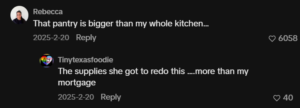
All this woman did was go out, buy some containers, and organize her dry goods. No crime against humanity was committed.
But yet, somewhere between the video and the comment section, her pantry became something personally offensive to a complete stranger.
We see this constantly online. A dad shares a sweet moment with his kids, and somebody accuses him of shaming less-involved parents. A woman posts her morning walk, and a stranger lectures her about people who don’t live in safe neighborhoods. Somebody makes dinner from scratch, and suddenly they’re sneering at everyone who uses a microwave.
The original post can be completely innocent. It doesn’t matter.
The trolls will always come out of the woodwork and find an insult hiding inside it.
Why Are We Trying So Hard to Be Offended?
One woman recently asked why the internet seems to be so filled with rage.
She wasn’t talking about heated political debates or complicated social issues. She was just referring to ordinary posts about ordinary life. People appear to hunt for the worst possible interpretation, then attack the creator for something they never actually said.
Author Jason Pargin responded with a theory.
@jasonkpargin♬ original sound – Jason Pargin, author
According to Pargin, two forces are colliding.
The first lives inside us. The second lives inside the machine.
He calls the human side a “negative-space personality.”
Now, bear in mind, this isn’t an official diagnosis or a recognized personality disorder. It’s Pargin’s own term for people who build their identity around everything they believe they’re not.
And once he explains it, you’ll start seeing it everywhere.
A Personality Built Backward
In art, negative space is the empty area around an object. The object takes shape because of what surrounds it.
Pargin believes some people build their identities the same way.
Instead of deciding what makes them a good parent, good friend, or decent person, they search for bad examples and stand beside them.
That parent screams at her children. I don’t.
That guy never helps his wife. I do.
Those people feed their kids junk every night. I would never.
Each comparison fills in another piece of the picture. Eventually, the person feels good about who they are without having to look too closely at their own choices.
And that works beautifully until somebody better wanders into the frame.
Now the parent who feels successful because others are doing worse sees a cheerful family cooking together. The children are helping. Everyone appears patient and capable. The kitchen isn’t on fire.
@emmythetwinmom Families that cook together, stay together 🤍 #momsoftiktok #cooking #momof2 #momtok ♬ sonido original – dinoedits_superandom🦖
Suddenly, the comparison doesn’t feel so good.
The easiest response would be to keep scrolling. The healthiest might be admitting, “That looks nice. Maybe we could try it.”
But both responses leave the uncomfortable feeling intact.
Picking a fight gets rid of it.
The family wasn’t sharing a happy moment. They were “showing off.”
The parents weren’t making dinner. They were shaming exhausted people who order takeout.
The video wasn’t about them at all, but now it has been transformed into a deliberate insult against them.
And this is the cycle, folks.
So, Is There Any Science Behind This?
Parts of Pargin’s explanation have a research trail going back decades.
Psychologists call one piece downward social comparison: feeling better about yourself by comparing yourself with someone worse off. In a 1981 review, psychologist Thomas Wills examined how this can help protect bruised self-esteem, sometimes through actively putting another person down.
That sounds a lot like the first half of Pargin’s theory.
Then there’s hostile attribution bias, which is basically inserting hostile intentions into situations where someone’s motives can’t truly be known. Researchers at the University of Chicago studied this phenomenon using scenarios that people could interpret differently, such as a friend damaging a borrowed car. In that example some participants were actually more inclined to believe that maybe their friend damaged their car on purpose, instead of it just simply being an accident.
The Internet Pays in Likes
Whatever starts these online arguments, the fact is that the internet algorithm seems to just feed these little rage trolls.
Instead of people just spreading vitriol and leaving it at that, the system literally promotes more and more rage to be piled on.
A 2021 study examined 12.7 million tweets and found that users who received more likes and shares for expressing outrage tended to express even more outrage afterward. Controlled experiments using a simulated social network also showed that rewarding negative responses encouraged people to choose them more often.
The researchers measured what people expressed, not how angry they actually felt, and that distinction matters. A comment section can get louder without everyone becoming equally furious.
The feed can amplify this problem, too. In an audit of Twitter’s ranking system, researchers found that its engagement-based feed elevated more emotionally charged content, like attacking political opponents. So basically the algorithm is pushing the content that’s fanning the flames the most, not necessarily what users prefer seeing.
Of course, those findings concern Twitter and political content, not an innocent pantry video. But they demonstrate the problem of treating all of these firey reactions as a recommendation. After all, something can hold your attention without being something you necessarily want more of.
But Still We Can’t Diagnose a Comment Section
Pargin’s explanation is useful, but we can’t really start treating it as a personality test for strangers.
The research above doesn’t establish that every nasty reply comes from insecurity or that someone has built their entire identity around hating other people. It also doesn’t prove that hostile misunderstandings have suddenly become more common.
If anything, we’re probably just more aware of it because most of us are glued to our phones and access is ridiculously simple at this point. Getting public opinion used to involve actually leaving your house, walking into town, and, you know, talking to people.
But still, Pargin’s theory and all the studies, facts, and figures do show that people can protect their self-image through comparison, misread another person’s intentions, and learn to repeat behavior that earns approval.
THE LANDING
The internet makes it easy to mistake having an enemy for having a personality.
STAY CURIOUS
Three more stories worth your curiosity.








1 comment