🪰 Have You Noticed Nobody Shops at Macy’s Anymore?

THE BUZZ
- Macy’s didn’t just lose customers. It lost relevance.
- Amazon wasn’t the only thing eating it alive
- The strangest asset left may be the dirt
Walk into a Macy’s and you can still see the bones of what used to be a pretty brilliant idea.
The perfume counters, escalators, endless racks of clothes with shoes over there, cookware upstairs, jewelry glowing under the glass, and some pretty girl spraying a fragrance you absolutely didn’t ask for.
For generations of Americans, this was shopping.
Back in those days, you didn’t need twelve websites and a week’s worth of packages arriving at your door. You went to one enormous building and wandered around until you found what you needed, plus three other things you definitely didn’t need.
And Macy’s wasn’t just good at the shopping game.
It actually helped invent it.
Which makes their sad downfall even more interesting. Trust me, this isn’t the tired ol’ “internet killed the red star” explanation.
Less than a decade after Macy’s was raking in about $28 billion a year, the stores started disappearing and the ground underneath was starting to look like the only valuable stuff left.
That is one helluva fall.
So how does a store go from helping define American shopping to making millions of people shrug and say, Eh, I’ll just order it online?
Well, turns out, Macy’s had a lot of help. And yes, some of it came from Amazon, and the death of the American mall… but a really big chunk of it came from Macy’s.
From an $11 Day to an American Institution
Before I start rummaging through the Macy’s wreckage, this breakdown does a great job of showing just how enormous the Macy’s story actually is.
It begins with a teenage whaler, a red-star tattoo, and a businessman whose first day of sales rounded up to about eleven bucks.
But it ends with store closures, piles of debt, disappearing malls, and investors asking if the ground underneath was worth more than the store on top.
That’s a quite an arc for one department store.
The really fascinating part is that Macy’s didn’t start out as some lumbering old company that couldn’t understand change… they were the “change.”
Back in the 1800s, shopping wasn’t convenient at all. One merchant would specialize in one thing, and somebody else sold something completely different. And the prices were anybody’s guess, because they weren’t always sitting neatly on little tags.
But then Macy’s came along with brand new ideas that sound painfully normal now because, well… they worked.
Shoppers could walk in, see a fixed price, and know they could return something if it didn’t work out. And bonus, they could find an array of wildly different products under one roof. That meant no bouncing from one specialty store to the next and no haggling over every damn purchase. Macy’s took this messy, annoying chore and made it easy, which is a big reason people started pouring in.
That was Macy’s magic. They made shopping fun and easy by pulling a bunch of separate stops under one roof. A century later, somebody else would take that same idea and make it even easier. Macy’s just wouldn’t be the one doing it this time.
Macy’s Didn’t Just Sell Stuff. It Became Part of America.
The company outgrew its founder pretty quickly.
After Macy died, the Straus family eventually took control, and by 1902 the company had opened its enormous flagship store in Manhattan. The store at 34th Street would become something much bigger than a place to buy a coat.
It became an iconic landmark.
Then Macy’s employees launched the parade in the 1920s. Giant balloons arrived a few years later. Miracle on 34th Street followed in 1947, with Macy’s planted right in the middle of one of the most popular Christmas movies ever made.
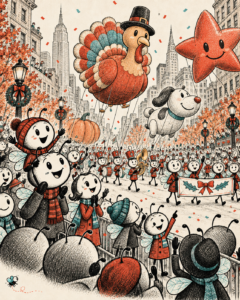
At that point, the company had achieved something marketers would sacrifice a small goat to obtain today…. They weren’t just known, people had real emotions about the brand.
That simple red star meant something, and don’t get us started on the Thanksgiving parade… it was an American tradition. And going downtown to Macy’s with the family meant something special.
Then America, always a fickle woman, moved on.
The Mall Years Were Very, Very Good to Macy’s
After World War II, families poured into the suburbs, cars filled American driveways, and malls began popping up all over the place.
But developers needed something really grand to convince people to drive to the mall.
Enter Macy’s…
Department stores became the anchors sitting at the ends of these giant new shopping complexes, and mall owners would give them insanely cheap rent because Macy’s brought in the shoppers.
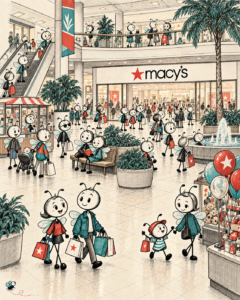
Someone would walk into the mall because they needed something from one of these anchor department stores, then pass twenty smaller shops on the way across the building. Those little stores paid much higher rents because the giant anchor stores were supplying all the foot traffic.
And for decades, it worked beautifully… and most people never thought it’d end. Saturday afternoon at the mall became its own form of entertainment. It was literally part of the American lifestyle.
You shopped, ate, met your friends, wandered around, and still spent forty minutes in a store sniffing candles.
I like to think of the mall as the internet with parking.
And holy crap, America built a ton of them.
There Were Only So Many Shoppers to Go Around
By the 1990s and 2000s, the country had malls everywhere… and I do mean everywhere. We had malls coming out of our eyeballs. It was too much.
The video described places where several malls were sitting within a short drive of each other, all built on a crazy idea that there were enough shoppers to keep them going.
And that whacko idea started getting shaky even before Amazon entered the chat, but they did enter, and that’s when things got really bad for Macy’s.
Suddenly the biggest advantage Macy’s had spent more than a century perfecting wasn’t quite so special anymore.
Remember their original promise? Everything you need, conveniently gathered in one place…
Well, Amazon looked at that and basically said, Cute.
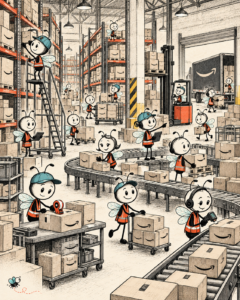
Now the “one place” was your couch.
Warehouses and faster delivery turned shopping into something you could do while eating cereal in your underpants. And soon, ordering any item could be faster than driving to the mall, finding parking, walking through a giant department store, locating whatever floor had the thing you wanted, and driving home again.
Macy’s had once revolutionized shopping by eliminating inconvenience.
The internet returned the favor… big time.
But believe it or not, that still wasn’t the whole problem.
Then Macy’s Started Erasing Stores People Actually Loved
During the 2000s, Macy’s corporate parent went on a shopping spree, scooping up department-store chains with decades of local loyalty behind them.
And then, instead of letting those names keep doing what they’d done for generations, Macy’s wiped them off the buildings. Marshall Field’s, Foley’s, and other beloved regional brands were replaced with the same red star and the same Macy’s name.
On a spreadsheet, you can see the logic of that business move. One national name is easier to advertise than a bunch, and it could get confusing for consumers. But human beings are annoyingly sentimental.
In places like Chicago, Marshall Field’s wasn’t just letters on a building. People had grown up with it, families had traditions tied to it, and shoppers trusted it.
When Macy’s replaced those names, some customers didn’t politely transfer a century of affection to the new sign and a red star.
They got pissed.
There were even boycotts, and shoppers refused to embrace Macy’s after their beloved local department store disappeared.
Macy’s had spent generations proving that a department-store name could become part of a community…. and they completely forgot the lesson while they buried their competition.
And somehow, the company still kept getting bigger.
For a while…
Then the Flywheel Reversed
Around the middle of the 2010s, Macy’s was still massive.
The video puts its peak revenue around $28 billion, with hundreds upon hundreds of stores operating across the country.
But underneath those numbers, almost every force that had once worked for Macy’s was now working against it.
The first big problem was that mall traffic was tanking. Who wanted to park half a mile away, fight the crowds, and spend three hours riding escalators when you could stretch out on the couch and shop from your phone?
And once online retailers started throwing around better deals, bigger sales, and endless comparison shopping, bargain hunters didn’t exactly need to be asked twice.
And Macy’s had another problem of its own making: years of sales, coupons, and discounts had taught customers that the sticker price was basically a suggestion. So, thanks to Macy’s, the American consumer was trained to love a sale, and they didn’t want to buy anything without one.
Macy’s could advertise another 20 percent off and drag deal-hunters through the door, but constant discounting also made it harder to convince shoppers that anything was actually worth full price. This was a vicious circle that ended up screwing Macy’s big time.
Macy’s was getting squeezed from every side.
And somewhere in all of this, an even more dangerous question started creeping into the chat.
Why exactly do I need Macy’s anymore?
The 28 billion dollar question.
The Store Lost Its Job
Think about what I told you Macy’s originally solved.
It gathered a huge amount of merchandise into one trustworthy place and made buying it super easy. Other big names caught on and started doing it better. Today, Walmart and Target can bundle an absurd amount of products together at really competitive prices. Amazon can offer an even more absurd selection without asking you to put on shoes.
So what’s Macy’s special job?
That answer used to be obvious, but over time it got awfully fuzzy.
And when customers stop understanding why a business needs to exist, the numbers tank.
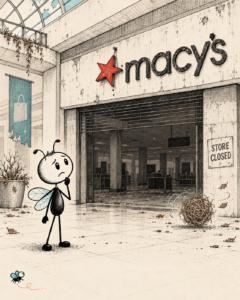
Which is where this story gets really strange.
When the Dirt Starts Looking Better Than the Store
By 2015, investors were looking closely at Macy’s property portfolio, and they didn’t like what they saw.
According to the video, one estimate put the company’s real estate at roughly $21 billion. Which, at the time, was likely much more than the retail business was worth.
Man, what a blow.
Macy’s had spent more than 150 years becoming one of the most recognizable names in American retail, and now the exciting part of Macy’s was… the land.
As a business owner, that’s probably not where you want the plot going.
It didn’t take long for the stores to start closing.
Then 2020 arrived and crushed the last bit of in-person retail into dust. Macy’s temporarily closed hundreds of stores, furloughed 120,000 employees, and borrowed billions in emergency financing while pledging major assets, including its famous Herald Square property.
That’s how Macy’s survived… but survival and recovery are very different things.
Real estate investors later came knocking with multibillion-dollar proposals to take the company private. But everybody knew that Macy’s was probably more valuable as a collection of assets than as Macy’s.
The end of an era…
That’s a really crazy place for the company that helped invent the modern department store to end up.
Macy’s is still trying to figure out what the next version of Macy’s is supposed to be, and part of that plan involves closing tons of stores.
In January 2026, the company revealed another round of locations headed for the chopping block as it continued what it calls its “Bold New Chapter.”
Macy’s has revealed the latest stores slated for closure as part of its ongoing efforts to reallocate resources and strengthen the brand.
In a memo shared with employees on Thursday, Macy’s CEO Tony Spring provided an update on the company’s years-long “Bold New Chapter” plan, which seeks to prioritize investment in certain existing locations while closing underperforming stores, among other tactics.
That’s corporate speak for insanely massive downsizing.
Sure, closing weak stores may help the numbers, but it doesn’t solve the bigger problem I’ve been prattling on about this whole time.
What is Macy’s giving shoppers that they can’t get faster, cheaper, or easier somewhere else?
Because until that answer gets way clearer, “Bold New Chapter” sounds more like sad wishful thinking.
Macy’s Still Has One Thing Most Retailers Would Kill For
The strange part is that Macy’s hasn’t disappeared from American culture. Every Thanksgiving, its parade still takes over Manhattan with giant balloons, marching bands, and the kind of national recognition most brands would give a kidney for.
Macy’s problem was never that people forgot the name. The red star is still instantly recognizable, and generations of shoppers still associate the store with holidays, malls, and a certain version of American retail. What changed was the reason to walk through the doors.
Somewhere along the way, dying malls, relentless discounting, online shopping, corporate consolidation, debt, and real estate pressure chipped away at the thing Macy’s once did best: making shopping feel easier and more appealing than the alternatives.
That’s the irony at the center of the whole story. Macy’s helped build its empire by making shopping more convenient, then watched newer retailers beat them at their own game.
THE LANDING
Macy’s still knows how to draw a crowd every Thanksgiving; it just never figured out how to draw that crowd back into the store.
STAY CURIOUS
Three more stories worth your curiosity.






3 comments