🪰 People Are Craving ‘Dumb TVs’ Again. So Why Are They So Friggen Hard to Find?
THE BUZZ
- Your TV got smart. Then it started taking notes.
- A screen that does a lot less became weirdly hard to buy.
- Now people want TVs that mind their business.
The good ol’ fashioned “boob tube” stopped being a box of mindless entertainment and became just another high-tech computer in your house.
The dumb TV got advanced, complete with Wi-Fi and apps and a home screen that wants to suggest things and sell you stuff. It needs software updates, and it knows what you like and don’t like. Depending on the TV and the settings you agreed to during that delightful 47-page setup process, it probably knows a disturbing amount about what tickles your TV fancy.
But now, after years of being “smartified,” now something wonderfully dumb is happening.
People want the idiot box back.
But they don’t want 300-pound vintage tube TV that requires three uncles and a neighbor to move it. They want a perfectly modern television with a beautifully simple feature:
It doesn’t know shit.
That means no internet connection, no smart operating system quietly humming in the background. They just want a screen, a few ports, and the forgotten ability to mind its own damn business.
Apparently, “dumb” has become aspirational.
Congratulations, your TV does nothing
This new interest in dumb TVs has been bubbling up because many people are tired of ads, sluggish interfaces, and the feeling that every appliance in the house is spying on them.
Westinghouse Electric Company has now jumped into the market with new “dumb” models, including a 32-inch 2026 set that skips the built-in streaming platform all together. Plug in an antenna, cable box, game console, or whatever streaming device you actually want, and the television behaves like televisions used to behave.
This clip explains why this dumb stuff sounds positively luxurious to so many people.
@shayne.vibes31
The funniest part is that Westinghouse isn’t selling some revolutionary anti-tech machine.
It’s selling a normal television.
A 24-inch Westinghouse non-smart model at Best Buy has HDMI, USB, and VGA connections, but no built-in smart platform. A new 32-inch model is built for buyers who want a modern screen without the internet-connected hooey.
The fact that this now qualifies as some crazy “niche” product is interesting.
Because if people actually want to buy these things, why aren’t manufacturers tripping over themselves to make them?
And that’s where our innocent little TV story starts getting less innocent.
Why can’t a screen just be a screen?
A dumb television has an annoying flaw from the manufacturer’s perspective… because once you buy it, the relationship is pretty much over.
They got your money, you got the television, and everybody shakes hands and goes home.
But smart TVs opened up a much longer and more deeply intimate relationship.
Advertising lives on the home screen, streaming services can pay for placement and branded remote buttons, and now your viewing data has real value. Content distribution agreements generate money way after the cardboard box has disappeared into the local landfill.
Vizio was very candid about this in its SEC filings. The company described two sides of its business: selling the actual devices and monetizing its SmartCast platform through advertising, data licensing, content distribution, and even those dedicated buttons sitting on the remote.
Suddenly the mystery of the disappearing dumb TV becomes a lot less mysterious, right?
The next video digs into how the economics work and why manufacturers have very little incentive to rip the “smart” part back out.
That printer comparison from the video is meaningful in this story. Why? Well, because selling somebody a printer is nice. But selling them ink for the next five years or more, is even nicer.
The television industry found its own version of ink.
Vizio’s numbers show why TV companies fell in love with the “smart” part. In 2022, Vizio made nearly $478 million from the side of the business tied to ads, data, and its smart-TV platform. The actual TV hardware the business produced only grossed $16 million in profit.
The TV hanging on your wall might be what you bought, but the big money will keep rolling in long after you bring it home.
But a dumb TV leaves a lot of that money sitting on the table… so they don’t want you owning one.
The part that sounds paranoid until you read the paperwork
Now we get to the reason some people don’t just think smart TVs are annoying.
They think they’re freaking creepy.
Smart TVs can use technology called Automatic Content Recognition, or ACR, to identify what’s appearing on the screen. It’s like that “Shazam” app for whatever you’re watching.
That technology has legit uses, but it also coughs up some very valuable viewing data.
Here’s where the “maybe my TV is a little too interested in me” joke stops being funny…
Because back in 2017, the FTC went after Vizio, accusing the company of using software on 11 million smart TVs to quietly collect second-by-second information about what people were watching without telling them.
And it wasn’t just snooping around inside Vizio’s apps. The system could recognize what was coming through your cable box, a DVD player, even regular over-the-air TV. That viewing history could then become part of the advertising machine, helping companies target you on other devices.
So, no, your television wasn’t literally sitting there with a tiny notebook, but the whole “is the TV watching me?” thing didn’t exactly come out of left field.
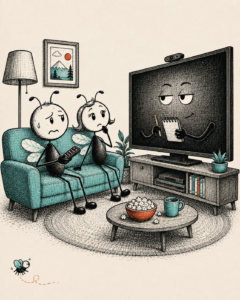
And then there’s the government angle… because smart TVs have piqued the interest of intel agencies. The 2017 Vault 7 leak described an alleged CIA and British intelligence project called Weeping Angel that targeted some older Samsung smart TVs. The reported technique could make an infected television appear to be switched off while using its microphone as a listening device. It was a targeted exploit involving specific models and, according to reporting at the time, required physical access to install the malware.
That explains why some people think about this “internet-connected microphone” in their living room and decide maybe the dumb TV wasn’t so dumb after all.
Maybe people are just tired
There’s another part of this comeback that has zero to do with the CIA spying on your favorite Dorito’s flavor.
Today’s television experience can be exhausting. You sit down because you want to zone out and watch something. Instead, you’re staring at recommendations from six different services while another app tells you the show you finally picked requires a special login, so now you have to go find your damn phone.
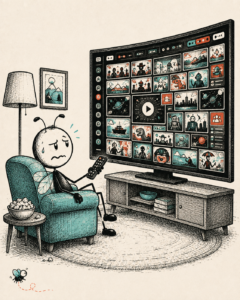
What? Meanwhile, the television is loading ads, and the streaming service has ads, and somewhere in the middle of this chaos, you realize watching TV is feeling a lot like managing a small IT department.
And it’s not that people are totally rejecting streaming or modern technology, because plenty of dumb-TV buyers will plug an Apple TV or Roku into the HDMI port without batting an eye.
The difference is control.
You pick the box, and you get to decide when it gets replaced. If the software turns to garbage, you replace a $40 stick. Done and dusted.
And if you want the television completely offline, great, just unplug the streaming device, and congrats, your television has forgotten the internet exists.
There’s something appealing about that these days.
The idiot box may have been onto something
The truth is, dumb TVs never really disappeared. They just got shoved into a weird little corner of the market while everything else sprouted Wi-Fi.
Try shopping for one now and you’ll quickly discover how strange that corner is. A lot of the remaining options are tiny bedroom TVs or commercial displays made for places like hotels and airports, where nobody needs Netflix recommendations popping up every five seconds.
That’s why Westinghouse bringing back a regular, modern TV that simply isn’t smart feels retro and rebellious.
And there’s clearly a demand.
Many people out there just want a screen that shows the picture and then shuts the hell up.
After years of turning every appliance into a computer, “leave me alone” is starting to look like a new and improved feature.
THE LANDING
Maybe the smartest TV is finally the one that knows how to mind its own business.
STAY CURIOUS
Three more stories worth your curiosity.









11 comments