🪰 Hollywood’s One Fatal Mistake That Neutered America’s Scariest Horror Villain
THE BUZZ
- Michael Myers was scarier before he had a reason
- Hollywood keeps explaining the monsters we fear most
- Sometimes the mystery is the whole damn character
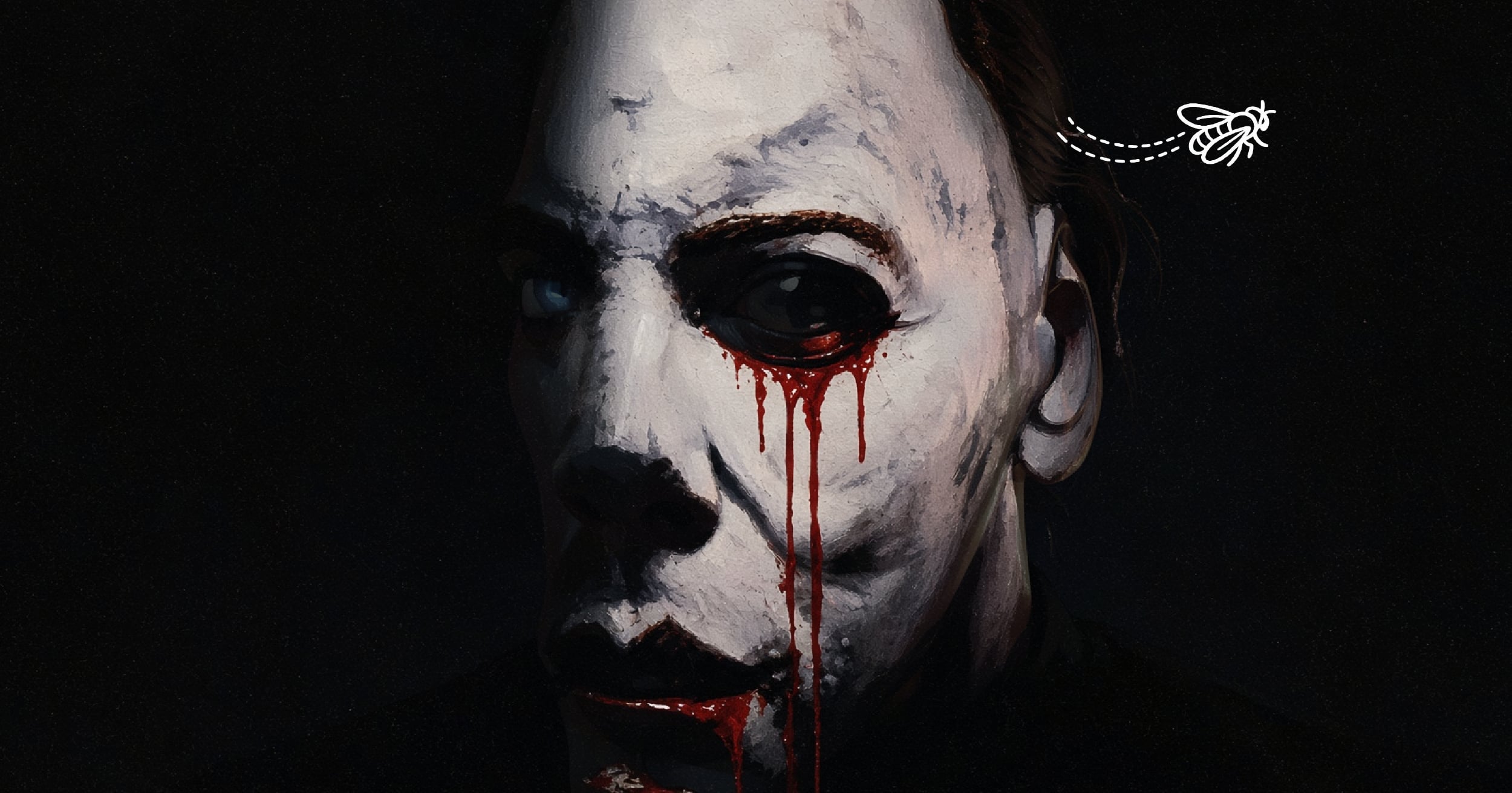
The scariest thing about Michael Myers in 1978 wasn’t his big ol’ knife.
It was the blank space where a logical reason should’ve been. Why was Michael a serial killer? What made him so evil?
After all, there was no obvious grievance against Laurie Strode, no 50-page manifesto explaining what the world had done to wrong him, and no neat little psychological memo that told us how a human being could become like that.
He simply was…
A creeper dude in a disturbing mask, with dead eyes, standing somewhere he shouldn’t be, just watching.

Honestly, it makes the hair on the back of my neck stand up right now.
It was the absence of an explanation that let your imagination do all the work.
Why her? What does he want? What’s he thinking behind that mask? Is there anything recognizably human going on back there?
Halloween understood something back in 1978 that Hollywood has spent decades forgetting or ignoring: sometimes the less you know about the monster, the scarier he is.
Because once you dive in and try to explain Michael Myers, you don’t make him deeper… you make him smaller.
THE DARK IS SCARIER BEFORE SOMEBODY TURNS ON THE LIGHT
Really good horror depends on our inability to see the whole thing. That’s why footsteps somewhere upstairs can be worse than actually seeing what or who made them. Your imagination doesn’t have to adhere to a special-effects budget, screenplays, or basic laws of anatomy or physics.
Your brain can build something way worse.
The same thing happens with great horror villains. Their missing pieces become part of the character because the audience fills those spaces with whatever scares them most.
Then some greedy Hollywood exec decides those missing pieces might just help pay for that third infinity pool he’s been dreaming about, and voilà, an origin story is born.
Trust me, he knows it’s a money grab, but his marketing team will convince you that you deserve to know what happened to the monster as a child.
No. Please, Mr. Hollywood Producer, leave the horrifying man alone.
This first clip gets into the bigger mistake Hollywood keeps making with characters who were frightening precisely because they were difficult, or impossible, to explain.
It isn’t only Michael Myers… the clip looks at characters like Hannibal Lecter and the Joker, along with villains from outside traditional horror, and asks why writers are so tempted to turn mystery into an A&E biography.
These characters begin as something deeply unsettling, and eventually some jackass decides there must be an equation underneath it all. Maybe trauma happened here, and tragedy happened there, untreated pain goes into the machine, and out pops this unspeakable monster.
The problem is that understanding somebody gives us a foothold on the terror.
Once you know what hurt the villain, what motivates him, and what he ultimately wants, you’ve begun drawing borders around him. He may still be dangerous, but he isn’t unknowable anymore.
That’s why it’s crucial to leave certain questions unanswered, because sometimes those empty spaces aren’t missing information at all.
They are where the horror lives and breathes.
@jasonkpargin
I think that instinct to explain monsters comes from a normal place, because people want cause and effect.
If somebody becomes horrifying, surely something must have made them horrifying. There should be a point on the timeline where we can place our finger and say, “There. Right there! That’s where everything went wrong.”
That may be satisfying storytelling in some cases, but for a legendary horror character like Michael Myers, it’s poison.
MICHAEL DIDN’T NEED A PERSONALITY
The original Michael is barely a personality at all, and that’s the genius of who he is.
He watches, follows, and waits. His face has been replaced with a blank expression that gives the audience nothing useful to work with.
Most movie villains want something. But Michael’s menace came from how little we understood about what he wanted or whether “want” was even the right word for whatever this basket case was doing.
You can’t negotiate with ambiguity like that. And you certainly can’t appeal to his humanity, because he has none. There was just this awful shape in 2XL coveralls coming toward you.
And he wasn’t in a hurry, which made him worse.
THEN HOLLYWOOD GAVE HIM A FAMILY TREE
One of the most consequential changes came when Michael and Laurie were turned into siblings. Good lord, Hollywood, what the hell are you doing?
All of a sudden the randomness was gone.
Now there was a reason Michael kept coming back to her. Okay, fine, that might create convenient sequel material, but it changes what made the 1978 original so disturbing.
If Michael is hunting Laurie because she belongs to his family, then the nightmare belongs to Laurie, not us.
If Michael notices Laurie for no reason at all, the nightmare belongs to everybody.
And that difference is huge.
The original lets you imagine that Laurie could have been anyone. Maybe Michael saw the wrong person at the wrong moment and something inside that blank head simply locked on like an apex predator. There’s nowhere comfortable for the audience to stand in that version.
But when you give him a bloodline, DNA, and a family photo album, the rest of us can relax a little.
Apparently, we’re not related… well, good luck, Laurie.
AND THEN SOMEBODY ADDED AN ANCIENT CURSE
Eventually, even murderous sibling drama wasn’t enough. The mythology kept growing until Michael’s evil was being explained through some ancient curse tied to killing his own bloodline.
Please, Michael, kill me now, so I don’t have to watch them butcher you anymore…
At that point, we’ve wandered very far away from the terrifying simplicity of the original 1978 movie.
Now Michael has a family tree and lore.
Oh, and he also has rules now. Is there a mythology binder somewhere?
And that changes the experience even more, because rules create predictability.
The thing standing in the darkness is less frightening once I’m sitting there thinking, “Okay, so technically the curse requires this and that…”
Absolutely freaking not.
Put the mask back on and stop telling me things.
THE BEST MICHAEL MYERS WAS ALMOST EMPTY
The second clip focuses on Michael and why the 1978 version remains so much more unsettling than many of the versions that followed.
The original worked because it was so incredibly restrained.
Michael was frightening because he felt like a presence. His stillness can still send shivers down the ol’ spine. And the fact that we knew almost nothing about him was the kicker.
But as this character accumulated motives, family connections and goofy mythology, the movies got really busy.
Let me say it again for the people in the back: Michael was terrifying because he had almost zero character development.
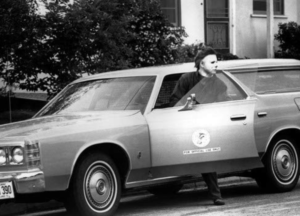
I want the version of Michael just standing across the street like a total creeper. The masked monster who noticed me for no reason, but is still “human” enough to know how to drive a damn car.
THE MASK WORKS BECAUSE THERE’S NOTHING BEHIND IT FOR US
The blankness of Michael’s mask is so damn perfect for the character because a normal face would give us something to read. Anger, fear, pleasure, hesitation, and even a flicker of recognition would make him feel human.
Instead, the mask gives us absolutely nothing.
So we start doing the work ourselves, staring at that empty expression and trying to imagine what could possibly be happening behind it. The original movie refuses to help, which leaves all that unused space wide open for the audience to fill.
That’s exactly what makes the mask so effective. Whatever you imagine behind it is probably more unsettling to you than any explanation a screenwriter could ever come up with.
SOMETIMES THE QUESTION IS BETTER THAN THE ANSWER
That’s really the lesson with Michael Myers. A mystery doesn’t exist because the writer forgot to explain something. Sometimes the mystery is the thing doing all the heavy lifting.
We don’t know why Michael kills, what he’s thinking while he watches people, or what exactly is driving him forward. Those unanswered questions make him feel bigger than the movie because there’s nothing solid enough to pin him down.
The problem starts when a franchise gets greedy about all that empty space and starts filling it with motives, family reunions, curses and lore.
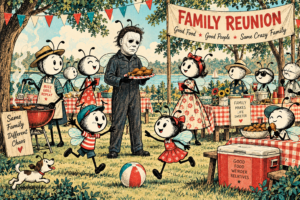
Every answer makes the character a little smaller, until the boogeyman starts feeling like a case file sitting on some underappreciated social worker’s desk.
And I’m sorry, but nobody was ever scared of paperwork. They’re just annoyed by it.
THE LANDING
Michael Myers was scariest when nobody knew what the hell he wanted.
 Q: Is the Story Of Stephen Hawking Totally Fake? A: Yeah, Probably

Post Comment