🪰 The ‘New York Times Bestseller’ is Kinda a Bunch of B.S.

THE BUZZ
-
Apparently, first place has several departments.
-
“Bestselling author” deserves a slightly closer look.
-
The book cover has an excellent publicist.
Just walk into any Barnes and Noble, and you really can’t swing a dead cat without hitting a “New York Times Bestseller.” You walk over to a pile of books arranged on a table, and you see that little gold stamp (whatever color it happens to be) on literally eight out of the ten books. And that’s just on that table.
You start to wonder, “Is every book a ‘bestseller’ these days?”
Well, in a way, yeah. The coveted “New York Times Bestseller” stamp of approval isn’t as unique as one would think.
Fantasy author Brandon Sanderson tackles that suspicion in his YouTube video Why Is Every Book A Bestseller? His explanation will definitely make you curious, although he does dismiss the idea that there’s cheating involved.
Number One in What, Exactly?
For a start, the New York Times has multiple bestseller lists. Yeah, there’s not just one. There are several.
Books compete in categories, like fiction/nonfiction, or work in different formats, and then books targeted at a younger audience get their own special treatment as well. A young adult novel and an adult nonfiction hardcover can both reach number one without ever competing head to head.
It’s actually sort of giving “everyone gets a trophy” vibes…
The arrangement can be useful, though. Seeing these “bestseller” labels takes some of the guesswork out of the whole book buying process. Instead of having to actually read the backcover and make our own decisions, a little sticker can do that for us.
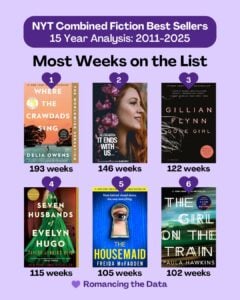
USA TODAY takes an even broader approach, ranking 150 titles each week across genres using sales reported by U.S. booksellers. Different lists can therefore give the same book different positions without anybody secretly moving decimal points.
Also, “bestseller” and “number-one bestseller” are totally different things.
Not too surprisingly, the total number of books sold plays a big role in this whole system. Sanderson points out BookScan as a tool the industry uses to measure how many copies are sold. Circana says its BookScan service covers approximately 85% of U.S. trade print book sales, which is a big number. However, it’s not covering 100%, so some data is obviously falling through the cracks.
Then, to make this even more convoluted, the Times also has its own reporting and analysis process, and it’s kind of “covert.” As NPR explains, the Times keeps its reporting and booksellers’ identities private, and their rankings are based on a process that readers are unable to fully piece together from the final list.
The Little Word Doing All the Work
Now pick up that book again and check whether the impressive “bestseller” claim actually describes the book or its author.
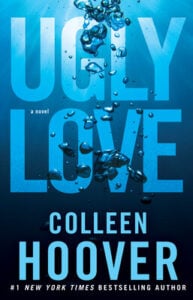
“New York Times bestselling author” can appear on a book that’s never even made the “bestseller” list itself. The author earned that credential through another title, and then that little fancy stamp can then be placed on all of their subsequent books.
And let’s be honest, sometimes a lot of us just pick up the book, see “NYT’s bestseller,” and don’t even distinguish that it’s referring to the author, not that specific book.
One word basically changes everything, and as Sanderson puts it, reaching the “bestseller” just once becomes a permanent marketing strategy for that author going forward.
And because you only have to hit number one once for number one New York Times bestselling author to appear on all of your books, then you only have to have it hit once.
The thing is, this isn’t actually deceptive. After all, the author did win the title once. But, as we pointed out, it’s remarkably easy to glance at a new release, see that familiar phrase, and then mentally rank that book sometimes a lot higher than it actually deserves.
A Very Good Week Can Last Forever
This label also has a wonderfully relaxed relationship with time.
A book that reached number one for a week can continue touting that achievement long after another title has been released. Also, that phrase doesn’t tell you whether a book briefly dominated its specific category for a week or legitimately was flying off the shelves for months.
Sanderson says publishers sometimes choose a release window with that competition in mind. In his example, an author might have a better shot at number one in February than during a crowded holiday season. It’s all about publishing strategy, as these folks aren’t just releasing books willy nilly. No, there’s a plan, and that plan will hopefully score a trophy.
John Green offers another helpful perspective in his own video about bestseller status. Describing Paper Towns, he says its first run on the young adult hardcover list lasted three weeks and involved roughly 20,000 copies sold. So a few good weeks can represent a golden time in a book’s life indefinitely.
The Bookstore Is Already Showing You the Winners
Sanderson’s strongest explanation is also the easiest to overlook: we aren’t seeing an equal number of copies of every book.
Successful titles can be printed in enormous quantities. They become the books you repeatedly see, which makes their success look much more ordinary than it is.
He illustrates the difference with his own career.
A giant bestseller will have millions of copies printed versus this other book that did well, but was not a bestseller. Elantris was not a bestseller. There were 10,000 copies of that in hardcover printed across its life.
He contrasts that with print runs of 400,000 for his Stormlight Archive books. Those are his reported printing figures, not a claim that every copy immediately found a reader. But the difference makes the whole visibility problem pretty obvious.
We’ve all been in the bookstore, seeing that gigantic pile of the latest New York Times bestseller, surrounded by small, sad little stacks of “ordinary” books.
Sanderson also points to the frequency illusion: once the bestseller phrase catches your attention, you start noticing it everywhere. In his explanation, the label benefits both from being books we see the most, and it also becomes something a lot of us actively look for. Whether we realize it or not.
And Yes, People Have Tried to Game It
Let’s not pretend that authors and publishers aren’t using this system to their advantage. Abuse happens, and people have caught on from time to time.
In 2017, Lani Sarem’s Handbook for Mortals briefly reached number one on the Times’ young adult hardcover list. But its quick success drew scrutiny from the YA community, including reports of people questioning booksellers if they actually reported sales to the Times before placing substantial orders.
NPR reported the controversy while noting it couldn’t independently verify all the allegations. Sarem said the orders were connected to planned convention appearances. The Times also investigated and removed the book, saying its sales didn’t meet the criteria for “bestseller.”
So that’s one documented removal following some legitimate questions about buying patterns. However, that alone doesn’t establish how frequently manipulation happens across the lists.
Nor does discovering one attempt tell us that every other attempt is caught. The available evidence supports more caution than either total cynicism or total reassurance.
We know that gaming does go on.
Patrick Healy, New York Times assistant managing editor, speaking to NPR in May 2026, WUNC News
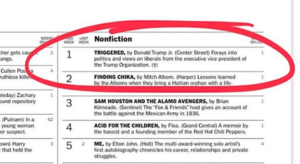
Healy also described checks intended to identify manipulation and make the lists reflect organic demand. One visible bit of context is the dagger symbol, †, used to flag bulk purchases. The symbol identifies a buying pattern, but it doesn’t, by itself, prove fraud.
The Badge Can Help Sell the Next Copy
As we’ve seen, the whole “New York Times Bestseller” thing is a literal badge of honor, and that recognition is often used to get people to buy the next book, and the book after that. And the book after that. It’s a vicious cycle.
Economist Alan Sorensen examined that effect in a 2007 study of hardcover fiction. He found that appearing on the Times list produced a pretty good sales boost, with an even bigger advantage for debut authors. It’s an older study, so take it with a grain of salt, but it helps explain why those few words on a cover have some big commercial value.
A shopper facing hundreds of choices can understandably treat other people’s purchases as a useful clue. The label can help a less familiar author get a first look, although it can also make us assume more than the ranking actually tells us.
Then Amazon adds another layer to this whole scheme. Its category rankings use a book’s position within a particular category, and Amazon confirmed that recent activity receives more weight. A high rank in some niche category on Amazon’s marketplace can muddy the rankings even more.
Sanderson jokes about some weirdly specific categories like “dark fantasy involving cats.” That doesn’t exist, obviously, but it’s a little example of just how obscure these categories can get.
So if someone is specifically looking for a dark fantasy involving cats, then bingo, there’s a category for that. But it’s definitely a ridiculously slippery slope.
Eventually, You Have to Read the Thing
Now, with all of this knowledge about the New York Times Bestseller list, you can now walk into Barnes and Noble with some more savvy under your belt.
The label can still tell you that a book found a substantial audience. But bear in mind that it’s within a particular system, category, and period. An author credential can tell you that something else they wrote was a “bestseller.” But really, none of this guarantees that you’ll actually enjoy the book.
Because at the end of the day, that’s the most important thing.
So have a look at the cover’s accomplishments, take in all the shiny labels, and then give the actual writing a chance to make its case. Somewhere past all the endorsements and accolades, hopefully there’s a decent story.
THE LANDING
Apparently, judging a book by its cover requires reading the fine print.
STAY CURIOUS
Three more stories worth your curiosity.

 Hollywood’s One Fatal Mistake That Neutered America’s Scariest Horror Villain


Post Comment