🪰 Who Decided We Were Done With Rock Music?
THE BUZZ
-
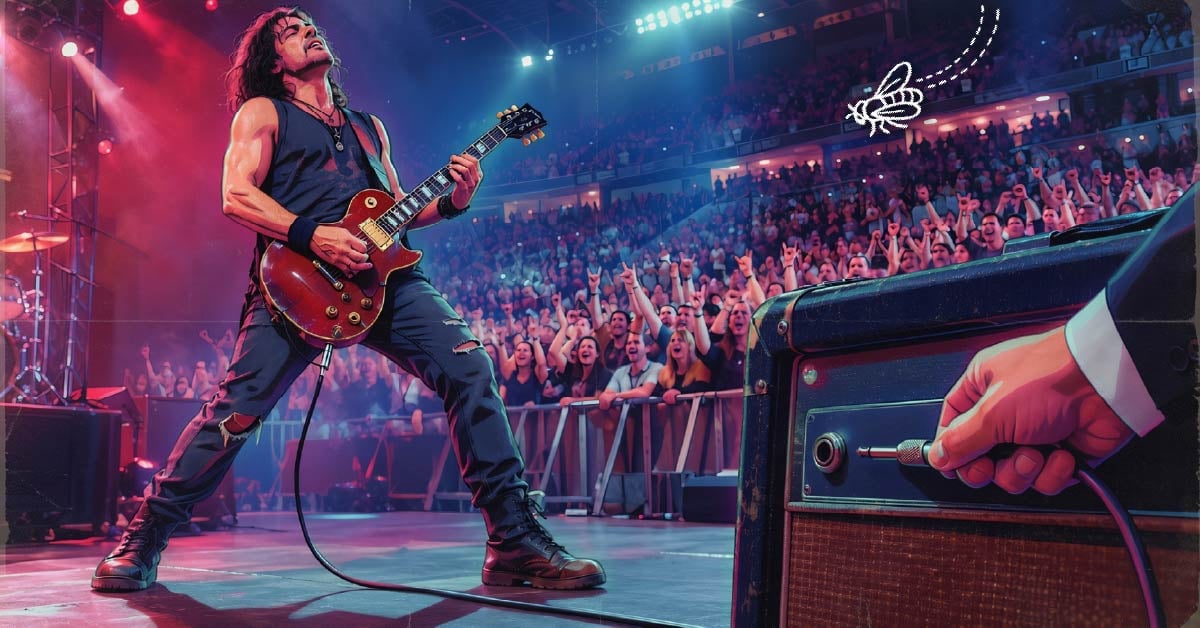
Did we stop loving rock, or did somebody change the station?
-
Who was choosing what came through our speakers?
-
Our musical tastes may have had some outside influence.
There were times where we used to sit in our parked cars waiting for the DJ to tell us over the radio who’d just played that killer song. Dinner could wait a minute because that guitar solo was on a whole ‘nother level, and we just had to know who was responsible for putting out such a mind-blowing riff. Simpler times, right?
There was a time where rock music ruled. Not just that the music was awesome, but it was the dominant genre that everyone had blasting from their stereos. Bands were popping up left and right, and just flipping on the radio was a whole exciting journey of musical discovery.
But then, sometime after the fall of grunge, rock music practically vanished. The days of rocking solos, crazy long hair flapping in the breeze, and throwing up a pair of “devil horns” were gone in a blink of an eye. Before we knew it, music videos on MTV were replaced by boybands and rap music. Gone were the days of gigantic hair, ballads, and Tommy Lee flipping around in a big metal cage, playing the drums like a madman.
A YouTube video from creator Rock Feed takes us through the journey of rock, starting with the memories of the genre being everywhere, then gradually disappearing from the mainstream. Rock Feed’s presenter asks the poignant question: what the heck happened to rock, man?
Billy Corgan, the Smashing Pumpkins frontman, thinks decisions inside the industry helped push rock out of the cultural spotlight. His recollection gives us somewhere specific to start looking: MTV in the late 1990s.
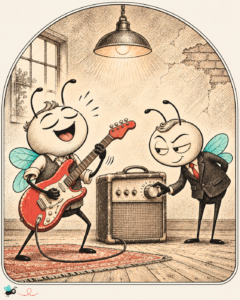
Rock Feed takes Corgan’s comments and follows an argument through radio ownership, industry money, and the disastrous images of Woodstock ’99. The video’s theory is that rock’s shrinking mainstream presence owed more to deliberate business decisions rather than fans simply waking up one day and deciding they were bored with guitars.
Corgan remembers when the room changed
In the podcast clip included by Rock Feed, Corgan places the shift around 1997–98. He remembers MTV deciding that rock was out and moving its attention toward rap, along with changes in what the channel would allow onscreen.
“All I know is I saw the gravity shift. If you were at MTV or around MTV 1997-98 suddenly they decided rock was out.”
Just imagine being a musician in that position. People are still interested in your band, but the platform that once helped bring the music to their fan base has decided to look elsewhere. From the audience’s side, that shift from one genre to another can feel gradual. But from inside the business, it might’ve arrived as quickly as a business excec’s afternoon call.
Rock Feed takes Corgan’s account of the so-called “end of rock” and argues that it was part of a deliberate effort to reduce rock music’s influence.
Who gets to choose the next song?
So, who killed the rock star? And why?
Well, there’s a combination of factors, but Rock Feed points first to the 1996 Telecommunications Act and the radio consolidation that followed as a crucial part of its explanation.
The presenter describes a move away from local DJs discovering regional bands and more towards programming decisions made across large groups of stations. With that shift, a band’s route to an audience became less local and a lot more spread out.
Just think about how it used to be: a local radio DJ might know the club where a certain band is playing or, just through word of mouth, knows there’s hype building for one band in particular. It’s that kind of “boots on the ground” local atmosphere that allowed for so many groups to gain recognition decades ago.
But then, things got larger, especially for radio stations, and decisions about who was playing over the sound waves suddenly had much bigger stakes. Instead of having a small pool of talent and a smaller audience to match, everything was scaled up.
Washington Monthly wrote an interesting piece on this shakeup all the way back in 1999, highlighting the death of local radio and its impact on the overall music industry.
For listeners, the most important result of consolidation has been that playlists are strategically selected by teams of market researchers who often live and work hundreds of miles away from the people that will actually hear the music. What you hear has been carefully crafted to appeal to targeted demographic groups. “Jacor is nothing if not shameless in taking what works at one station and applying it to others,” says Pam Taylor. DJs at corporate stations have little discretion in what they play; it becomes unlikely that something new and untested will get on the airwaves. A recent story in The Washington Post showed a compelling link between the corporatization of post-deregulation radio and the greater difficulties facing new artists trying to get record deals and get their music played on radio stations.
Changes in any realm are usually cause for nostalgia, and so it has been with radio deregulation. It is easy to forget that radio has always been in thrall to the top 40, and the notion of the mythic, music-loving DJ who plays whatever strikes his fancy is mostly fiction. But consolidation has made it even less likely that you’ll hear something new, different, or even slightly out of the ordinary. On an oldies station, probably the most heavily researched and systematized format in radio, you’ll hear the Beatles’ “Hey Jude” and “In My Life” practically every day, but more obscure songs like “I Need You” and “I’m Only Sleeping” get little or no play. , `
It’s an unfortunate shift, because no matter how talented or popular a group might be, their influence might never shift past their own city or state due to the death of the local radio DJ.
It’s funny to think, but these local radio stations had way more of a connection to grassroots music than we might’ve realized.
Some songs arrived with financial assistance
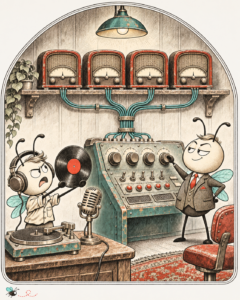
It’s important to note that the whole idea of “local radio DJ discovers incredible band” wasn’t always the scenario. That’s far too simplistic, and of course, money came along and muddied the water.
Rock Feed highlights “payola,” which is basically a practice where payments, influence, and benefits are used to obtain radio time. The presenter argues that later industry spending favored pop and hip-hop while rock music lost its money and luster.
I’m sure there are lots of us who think our music taste is our own, but, if we’re being honest, there’s more than just our eardrums involved here. It’s not like we all decided one day to throw out our “Slippery When Wet” albums and pick up a Jay-Z CD. No, this has all been a slow but still rather intentional shift from one industry to another.
And this isn’t just hearsay. A report from Pollstar back in 2005 covers Sony BMG’s staggering $10 million settlement where the company was accused of “payola” practices in the music industry
Sony BMG paid for vacation packages and electronics for radio programmers, footed the bill for contest giveaways for listeners, paid some operations expenses of radio stations and hired “independent promoters” to provide illegal payments to radio stations to get more airplay for its artists, Spitzer’s probe showed.
E-mails among company executives reportedly showed top officials were aware of the payments.
In one instance, an employee of Sony’s Epic label asked: “What do I have to do to get Audioslave on WKSS this week?!!? Whatever you can dream up, I can make it happen.”
In another case, a promoter unhappy that Celine Dion‘s “I Drove All Night” was being played overnight on some stations threatened to revoke a trip to a Dion show in Las Vegas unless the play times improved.
Spitzer said Sony BMG employees sought to conceal some payments by using fictitious contest winners to document the transactions.
Sony BMG Music is the parent company to several major labels including Arista, RCA, J Records, Epic, Columbia and Sony Music International.
The $10 million will be distributed to not-for-profit entities and earmarked for music education programs, Spitzer said.
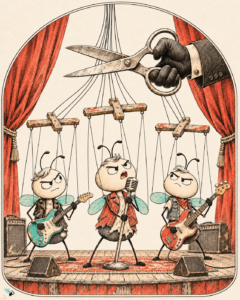
This is about more than just following the money. This is about how the music industry shifted from individuals producing music to the industry itself pulling the strings, and the musicians either happily becoming marionettes or risk getting their strings cut.
Woodstock ’99 gave the argument some ugly footage
When we think of Woodstock, I’m sure most of us picture the iconic festival from ’69, with all the hippies, peace signs, and iconic artists like Jimi Hendrix and Janis Joplin. Three days of peace, love, and music.
But there was another Woodstock, and it’s one that I think most of us would like permanently wiped from our memories.
This Woodstock was less about peace and love and more about fires, riots, and violence.
Rock Feed argues that the disaster of Woodstock ’99 gave executives even more reason to distance themselves from rock culture. Those images of rage filled chaos turned a musical audience into a business liability, making a move toward more controlled pop acts easier to justify.
Of course, Woodstock ’99 itself didn’t kill rock, but it certainly didn’t help a movement that was already on life-support.
Meanwhile, people are still buying tickets
Rock Feed begins their video with a poignant observation. One that keeps pulling us back to one important factor: the audience.
There are pop artists with enormous Spotify listener counts who still struggle to actually sell concert tickets. While, on the flip side, rock bands with much smaller streaming audiences still draw some pretty substantial crowds. This comparison shows that maybe there’s a gap between what the mainstream industry wants us to listen to and what we’re actually willing to leave the sofa for.
Look, anyone can go on Spotify, download a song, and press play. There’s basically little to no effort there. But attending a concert? That takes substantially more effort. First you’ve gotta look up dates, budget the cost, and then actually get yourself to the venue. All of this involves a lot more coordination than just tapping a few buttons on your phone.
Just for comparison’s sake, Pollstar reported that veteran rock group Metallica is still selling concert tickets like hotcakes, even outperforming newer, more “popular” artists.
Metallica moves up one position to claim the top ranking on LIVE75 after debuting at No. 2 last week based on ticket sales at three recent stadium shows. The heavy metal titans are back on the chart after resuming their “M72 World Tour” on April 19 with performances in two North American cities, the first of 13 booked in Canada and the U.S. through June.
One sold-out show at JMA Wireless in Syracuse, New York and two at Rogers Centre in Toronto moved a total of 137,620 sold tickets for a per-night average of 45,873 to earn the top ranking. Combined grosses from both venues hit $15.2 million for an average of $5.06 million per show.
Now beginning its third year since launching in April 2023, the tour supporting 72 Seasons, Metallica’s most recent studio album released two weeks ahead of the tour, has grossed over $340 million so far from more than 2.9 million sold tickets at 49 stadium concerts. While most of the tour’s performances have occurred in Europe and North America, the group is planning a jaunt through Oceania and the Middle East at the end of this year. Then, in 2026, a final run of European dates will stretch from May through July.
Post Malone follows at No. 2 on LIVE75 with a ticket average of 45,596 – just 277 tickets less than Metallica’s average – based on three of his own recent stadium events. The singer/rapper’s “Big Ass Stadium Tour” kicked off on April 29 and drew 136,788 fans to the first three concerts, grossing $21.3 million for a $7.1 million per-show average.
You really can’t discount loyalty. The years can keep going by, but with a lot of rock bands, you’ve got a fan base that’s “ride or die” for life. No matter how many kids they have or cholesterol pills they have to take, a Metallica fan will be there with their “devil horns” all ready to thrust into the air.
And that’s something no amount of money or power can reproduce…
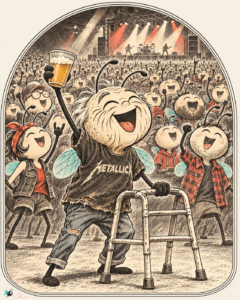
This whole thing really puts into perspective not only just the industry and its influence, but also the equal power of the regular folks who put bands like Iron Maiden, Mötley Crüe, Black Sabbath, and countless others on the map. Without them, the artists we know today would’ve never existed.
While we can’t go back to those simpler days of sitting in our car, waiting for the radio DJ to announce the band, we can still remember that time was special, and our cassettes, hairspray, and acid-wash jeans will never be forgotten.
THE LANDING
The people who decide what gets played on the radio don’t get to decide which songs we’ll be singing badly for the rest of our lives.
STAY CURIOUS
Three more stories worth your curiosity.



Post Comment