🪰 Why Aren’t Actors Ugly Anymore?
THE BUZZ
-
Hollywood used to cast faces you remembered
-
Now everybody looks airbrushed, Botoxed, and camera-ready
-
Did Hollywood’s obsession with perfection make movies boring?
Have you ever watched an old movie from the 1970s or ’80s and noticed something that seems almost shocking by today’s Hollywood standards?
The actors look like actual human beings.
They’ve got crooked teeth, receding hairlines, big noses, wrinkles, weird facial features, and the occasional physique that suggests they enjoy a cheeseburger and haven’t seen the inside of a gym since high school.
And somehow, they were still big-time MOVIE STARS. Some of the best, actually.
Think about Jack Nicholson, Dustin Hoffman, Gene Hackman, Bill Murray, or Bruce Willis in his early days. These guys weren’t ugly, necessarily, but they certainly weren’t walking around looking like underwear models. They had interesting faces and sometimes downright odd appearances that made them instantly recognizable and really cool and unique.
And the women were just as interesting.
Shelley Duvall, Sissy Spacek, Mia Farrow, and Cher all had their own distinctive looks that made them unforgettable on screen. They weren’t interchangeable beauty queens who looked like they’d just stepped out of the same plastic surgeon’s office.
Now, don’t get me wrong. Hollywood has always been filled with drop-dead gorgeous people. That’s hardly a new development.
But here’s what’s changed…
Those beautiful stars used to exist alongside a wonderfully weird collection of ordinary-looking people who could actually pass for your neighbor, your accountant, or the slightly creepy dude working behind the counter at the gas station.
Today, practically everyone landing a major role has perfect teeth, flawless skin, fantastic hair, and a body that takes an army of personal trainers and a refrigerator full of protein to keep up.
Even the actors playing supposedly ordinary, middle-aged people look like they could leave the movie set and head straight to a Calvin Klein photo shoot.
And here’s something else I’ve been wondering that might be tied into this whole thing.
Could Hollywood’s obsession with making everybody look perfect be part of the reason so many modern movies feel so incredibly bland?
Because when you start comparing the faces, the characters, and even the way movies are filmed today, there’s something really artificial about the whole experience.
And it goes a lot deeper than a few Botox injections and a new set of electric white veneers.
WHEN HOLLYWOOD ACTORS USED TO LOOK LIKE ACTUAL PEOPLE
I stumbled down yet another rabbit hole and found a fascinating video that puts this issue in a way that I hadn’t really thought about.
The creator compares actors from the 1970s and ’80s with their modern counterparts, at nearly identical ages, and the differences are wildly remarkable.
It’s about how the entire visual personality of Hollywood has changed.
The faces, bodies, hairstyles, teeth, and even the way characters look after getting the absolute crap beaten out of them have become polished.
WAIT, BILL MURRAY WAS ONLY 33?
Okay, can we talk about the fact that Bill Murray was just 33 years old when he made Ghostbusters?
THIRTY-THREE!
Now compare him to the average 33-year-old leading man working in Hollywood today.
Murray looked like a regular guy with a slightly questionable lifestyle who happened to be hilarious. He had a face full of personality, hair that did whatever the hell it wanted, and the appearance of somebody who might’ve spent the previous evening in a bar until closing time.
And nobody cared.
Bruce Willis was around the same age when he made Die Hard. He was handsome, sure, but he also had a hairline that was in retreat, a fairly ordinary physique, and a wonderfully believable face that made John McClane feel like an actual New York cop who’d gotten himself into a terrible mess.
Now compare that to Glen Powell in Twisters or Robert Pattinson playing Batman at roughly the same age Michael Keaton was when he first put on the costume.
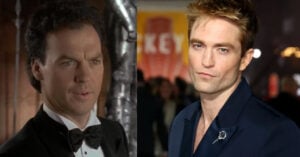
They’re all talented, good-looking men, but there’s something noticeably different about the modern version of a Hollywood leading man.
The grooming is immaculate, the skin looks practically flawless, and the bodies often appear to have been designed in a laboratory.
Of course, some of this has to do with changing hairstyles, better skincare, healthier lifestyles, and modern grooming habits. People generally present themselves differently than they did 40 or 50 years ago.
But there’s another part of this that I think is worth talking about.
Hollywood used to embrace faces that were genuinely distinctive, even when they weren’t conventionally attractive. But these days, they’re determined to make everybody look like the most attractive version of the same person.
And that might be costing movies something far more valuable than good looks.
REMEMBER WHEN A FACE COULD DO HALF THE ACTING?
Think about Jack Nicholson in The Shining.
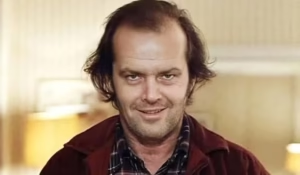
That man had a face practically designed for making you uncomfortable. His eyebrows, his crooked grin, those wild eyes that made you wonder whether he was joking or about to murder somebody.
And then there’s Shelley Duvall, whose unusual features and enormous expressive eyes made Wendy Torrance seem genuinely vulnerable and terrified.
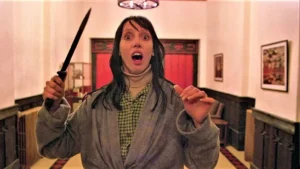
You believed these were two actual people trapped in a horrifying situation.
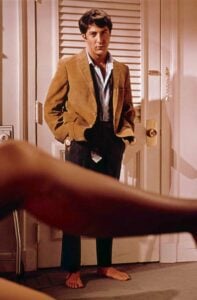
Or consider Dustin Hoffman in The Graduate. He looked like an awkward, uncomfortable young man trying to figure out what the hell he was supposed to do with his life, which was exactly the point.
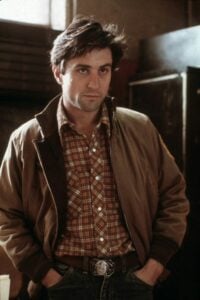
Robert De Niro’s scruffy appearance in Taxi Driver helped make Travis Bickle feel like somebody who really might be driving a cab through the grimy streets of 1970s New York.
And if you want a fantastic example of a face carrying an entire character, watch Gene Hackman in practically anything.
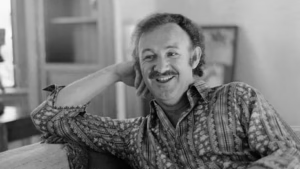
None of these actors needed the kind of physical perfection that’s expected from today’s leading men and women.
Their imperfections were part of what made them so freaking cool.
Now imagine casting some perfectly sculpted 35-year-old with porcelain veneers, immaculate hair, and the jawline of a Greek statue as a depressed New York cab driver.
Would you actually believe he spent twelve hours a day sitting behind the wheel of a filthy taxi? Or would you spend half the movie wondering what skincare products he’s using?
That’s the problem.
When everybody looks like they belong in a luxury perfume commercial, the characters start losing some of the physical personality that made them believable in the first place.
And it isn’t just the faces themselves.
Even the way Hollywood allows those faces to appear on camera has changed.
APPARENTLY, EVEN GETTING YOUR ASS KICKED HAS TO LOOK SEXY NOW
Remember Sylvester Stallone at the end of Rocky?
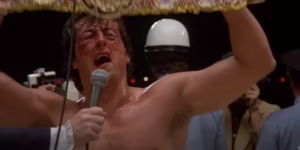
The guy looked like he’d been dragged behind a truck, thrown down a flight of stairs, and then beaten with a shovel just for shits and giggles.
His face was swollen, bloodied, sweaty, and practically unrecognizable after a brutal fight.
Which made perfect sense, considering he’d just spent fifteen rounds getting punched in the head.
Now compare that to some of the modern boxing and action movies where the leading man finishes an absolutely savage fight with a tasteful little bruise under one eye and just enough sweat to make his muscles glisten.
How convenient.
The video makes a similar comparison between Tobey Maguire’s battered appearance in Spider-Man and the more carefully arranged injuries on Tom Holland’s version of the character.
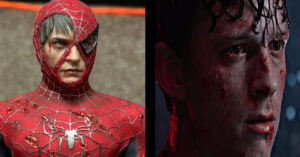
And it’s a pretty stone-cold observation.
Older films often allowed their stars to look genuinely terrible when the story demanded it. Dirty hair, swollen faces, bloodshot eyes, and sweat-soaked clothes helped sell the physical experience of whatever nightmare the character had just survived.
Today, many productions seem reluctant to let their beautiful stars become too visually icky, even when they’ve supposedly spent the last hour fighting for their lives.
God forbid somebody’s $20 million smile gets obscured by a realistic-looking injury.
But all this perfection isn’t happening by accident. There’s an entire beauty industry helping Hollywood achieve it.
HOLLYWOOD’S NEW LEADING ROLE: THE DERMATOLOGIST
Let’s talk about what it actually takes to maintain that modern A-list appearance.
Actors have access to personal trainers, nutritionists, dermatologists, cosmetic dentistry, sophisticated skincare treatments, and an expanding menu of procedures designed to keep people looking younger and more conventionally attractive, and fake at times.
Hair restoration can get rid of those pesky receding hairlines. Veneers can make imperfect teeth dazzling. Injectables and cosmetic surgery can alter facial features or soften signs of aging.
And that’s before the cameras even start rolling.
Once cameras are involved, we enter a whole new realm. Today’s digital tools give filmmakers chances to retouch, smooth, and manipulate appearances in ways that simply weren’t available to earlier generations of actors.
Now, I’m not suggesting every Hollywood star has had work done. But the technology and services are available, and the pressure to remain physically marketable in an extremely competitive industry is off the charts.
Especially for women, who’ve spent decades dealing with Hollywood’s unforgiving attitude toward aging.
But trust me, the men are starting to play the same game. Remember when a receding hairline was just something a middle-aged male character had. Part of life, type stuff.
Today, a leading man can be pushing 50 while sporting the hairline, teeth, and physique of some dude in his 30s.
And while there’s nothing wrong with wanting to look good, the cumulative effect is fascinating. Because we’ve reached a point where the features that once made actors distinctive are now treated like imperfections that must be cosmetically or digitally corrected.
Everybody’s getting more beautiful, but somehow the faces are becoming less interesting.
And there’s actually a name for another part of this strange phenomenon.
WELCOME TO THE AGE OF “IPHONE FACE”
If you’ve spent any time watching period dramas lately, you might’ve run into something called iPhone Face.
It’s that peculiar moment when an actor appears in a movie supposedly set in 1820 but looks like they just finished filming a TikTok beauty tutorial.
Their hair is perfectly styled, their teeth are blindingly white, and their face has that unmistakably modern, polished appearance we associate with contemporary celebrities and influencers.
You can put somebody in a corset, surround them with candles, and drop them into a beautifully recreated nineteenth-century drawing room, but if they look like they’re about to whip out an iPhone and check Instagram, the illusion gets really shaky.
A convincing historical movie should make you feel like you’ve stepped into another time… the clothing, surroundings, hairstyles, and physical appearances all help create that illusion.
But when the actors look like today’s most fashionable celebrities dressed up for a very expensive Halloween party, obviously, it feels off.
Granted, the iPhone face isn’t some medical condition… but maybe it should be. For now, it’s a cultural observation about how modern beauty standards can make actors look out of place in older settings.
And I think it’s a pretty clever description.
We’ve developed such a recognizable contemporary standard of attractiveness that it can practically timestamp somebody’s face. Which is pretty ironic when you consider Hollywood has more sophisticated technology than ever for recreating historical worlds. We can digitally rebuild ancient cities and create entire armies of computer-generated soldiers, yet we somehow struggle to make a person look like they existed before Invisalign.
And audiences are noticing.
APPARENTLY, WE’RE NOT THE ONLY ONES NOTICING
One thing I found particularly interesting while falling down this rabbit hole is how many people seem to miss seeing ordinary-looking actors in movies and television.
And some viewers have noticed a real difference between American productions and shows made in other countries.
One Reddit user described watching British television and being struck by something that once would’ve seemed totally unremarkable.
The actors looked like regular people.
Which, when you think about it, is a pretty funny observation to make about an industry that’s supposed to portray human beings.
There aren’t enough regular looking and ugly people acting in US television and movies.
There aren’t enough regular looking and ugly people acting in US television and movies.
On my first trip out of the country I noticed on TV there were regular looking actors on British TV. It got me to thinking that in America, there mostly seem to be very good looking people with perfect skin and teeth in TV and movies.
It was nice to see regular looking folks playing serious roles on English television.
On a side note, I think in the US that possibly the media mainly hiring good looking people might contribute to our country’s obsession with youth and beauty.
WHEN DID NORMAL BECOME UNACCEPTABLE?
I think this person makes a really interesting point.
There’s something refreshing about watching a television show where the middle-aged detective actually looks middle-aged, the exhausted mother looks really tired, and the grumpy old neighbor hasn’t been spending $40,000 a year keeping his jawline tight.
At this point, it’s worth reminding ourselves that we’re talking about actors here. Their entire profession revolves around convincing us they’re somebody else.
And what does it do to the rest of us when the people we’re constantly watching on screen seem to have fewer and fewer physical imperfections?
If every 45-year-old woman on television looks 29 and every 50-year-old man has the physique of an undie model, eventually normal aging starts looking like something that’s gone horribly wrong.
Which is ridiculous.
We’re not all supposed to look like movie stars.
But frankly, movie stars shouldn’t all have to look like movie stars, either… you feel me?
And that brings us to the bigger problem I think Hollywood has created for itself.
HOLLYWOOD IS TERRIFIED OF TAKING RISKS, AND IT SHOWS
I find it fascinating that this obsession with physical perfection is happening at the same time Hollywood is struggling so badly with originality.
We’re living through an era where studios keep returning to sequels, reboots, and remakes, hoping audiences will show up for something they already recognize.
A few of those movies are terrific, sure.
But there’s also a ton of expensive, forgettable garbage being churned out by an industry that is nervous about trying something different.
And I wonder whether the same mentality has worked its way into casting.
If you’re spending all this money to make a movie that needs to appeal to audiences around the world, there’s probably a temptation to cast somebody who checks every conventional attractiveness box.
Beautiful face? Check.
Perfect body? Check.
Millions of social media followers? Even better. Check, check, check.
Why take a chance on somebody with an unusual appearance when you can hire a gorgeous, internationally marketable celeb who already looks fantastic on a movie poster?
I get the nervous-nelly business logic.
But the problem with minimizing every risk is that you polish away the things that make a movie memorable.
And that’s something old Hollywood understood, and new Hollywood can’t figure out.
GIVE ME THE WEIRD FACES BACK!
Think about some of the greatest movies ever made.
The Godfather was filled with actors whose appearances told you something about their characters before they even opened their mouths.
The Shining wouldn’t have been the same without the unsettling physical presence of Jack Nicholson and Shelley Duvall.
And Ghostbusters worked partly because its stars looked like a collection of slightly dysfunctional scientists who’d somehow stumbled into the paranormal extermination business.
Can you imagine remaking that movie with four impossibly gorgeous male models who all have perfect teeth and six-pack abs?
Actually, don’t answer that. Somebody in Hollywood might be listening.
But seriously, there’s something to be said for allowing characters to look strange, awkward, tired, imperfect, or simply ordinary.
Those physical differences help tell stories.
They give us faces we remember even after we’ve forgotten what happened in the movie.
Look, I’m not campaigning to ban hot people from Hollywood. Good-looking actors have been part of the movie business since the beginning, and there’s certainly nothing wrong with enjoying a little eye candy.
But somewhere along the way, Hollywood seems to have confused physical perfection with screen presence.
Some of our most memorable actors became stars precisely because they didn’t look like everybody else.
Audiences don’t need another perfectly sculpted superhero or impossibly beautiful detective. Sometimes we just want to watch somebody who looks like they might actually exist do something cool.
And honestly, with Hollywood struggling to deliver fresh, memorable entertainment, bringing a little humanity back to the screen might not be the worst idea in the world.
THE LANDING
Hollywood keeps making its actors more beautiful, but maybe a few good old-fashioned ugly faces are exactly what the movies need.

 Every Gen X Kid Knows This Mysterious ‘S’ Doodle. But Nobody Knows Where It Came From



Post Comment