🪰 Crumbl and the Great American Sugar Crash

THE BUZZ
-
America fell hard for a photogenic cookie.
-
Customers supplied the reviews and free publicity.
-
Repeat business takes more than a good unboxing.
There was a time when things were simple…
When a cookie could just quietly sit on a plate without anyone asking whether it deserved an eight out of ten. No unboxings, no impromptu car review videos. Just a cookie. A lump of sugar, butter, and flour.
But then Crumbl came along and transformed the simple cookie into the next American Idol. Every week, we sit around waiting to cast our vote on which sugary monstrosity was best.
With its pink boxes and changing menu, the company turned buying dessert into something you could follow, week by week. A new lineup gave people a reason to check their phones, go on TikTok and compare opinions, and decide whether this was the week they needed a cookie the size of a dinner plate.
And sure, what the heck is wrong with indulging here and there? Looking forward to a little sweet treat at the end of a long week is just one of those small pleasures in life. However, the simple idea of indulging here and there has now spiraled into the Crumbl monster.
In his video on Crumbl’s rise and fall, entrepreneur Michael Girdley follows the company from a single Utah store to a chain with more than a thousand locations, worldwide influence, and the pressure beneath all that frosting. The story gets especially interesting when he compares the consumer buying a box of cookies to the actual people buying into the franchise. Let’s just say, they have wildly different experiences.
NEW LONG FORM VIDEO: Why nobody eats Crumbl Cookies anymore
Crumbl Cookies went from a single store in Utah to more than 1,000 locations in less than seven years, becoming one of the fastest-growing restaurant chains in America. At its peak, the average store was generating more… pic.twitter.com/elk9l8h1gh
— Michael Girdley (@girdley) September 24, 2026
The Box Was Part of the Recipe
Crumbl began in Logan, Utah, in 2017, founded by cousins Jason McGowan and Sawyer Hemsley. As Girdley explains, their backgrounds in technology and marketing shaped how they approached the business. Recipes were tested and adjusted, with customer responses helping to determine what stayed and what went.
The pink box brought that same attention to the part of the purchase. Holding up that box became a flex in and of itself. Lift the lid, and the cookies were already arranged for their close-up. An extravagant topping looked even more impressive beside five others, all neatly presented in packaging you could recognize immediately.
It’s an impressive amount of work for a piece of glossy cardboard.
Then the rotating menu gave that recognizable box a new reason to appear. Girdley describes how the weekly releases helped turn customers into an audience:
Each week, new cookie designs, and they would retire them after a while. You announce flavors via social media on Sunday night, then your customers do the marketing for you, sometimes lining up for the privilege of telling their friends about it.
That arrangement gave this rather simple purchase a little suspense. Your favorite might be back, or there might be something you wanted to try before it disappeared. It’s like collecting baseball or Pokemon cards, but with way more caloric intake.
The cookie was still the thing you ate, but the experience stretched well beyond eating it. Crumbl had given dessert an episode schedule.
@cillastyle so ready for all the fall desserts 🎃🍂🍁 #crumbl #crumblcookies #mukbang #cookies #crumblcookiesoftheweek @Crumbl
A Treat for a Very Boring Afternoon
Girdley connects Crumbl’s rapid expansion to the pandemic, when a business built around takeaway treats had an obvious appeal. With so much ordinary life interrupted, a box of elaborate cookies offered something small to look forward to.
That’s the bit that I think a lot of us can understand, because COVID was one hell of weird time. During a time when we were all confined to our homes, sanitizing everything in sight, getting excited about a cookie was hardly the worst coping strategy anyone could devise.
For the business, though, demand arriving under those conditions created a difficult question about what would happen afterward. A Crumbl store with a line out the door could clearly demonstrate that people wanted the product right then and there. But predicting how often they would return once their routines went back to normal was a different matter entirely.
Girdley lays out the problem in layman’s terms:
Numbers, when you run a business are incredibly good at giving you a picture of what happened before. They’re incredibly bad about telling you where you’re going.
A queue stretching outside of a shop is persuasive because you can see it. But knowing how many future customers are sugared out is a harder figure to gauge.
The First Bite Has to Become a Second Visit
The primary challenge for Crumbl is what comes after someone has tried about 2,000 calories worth of their sugary confections.
Sure, curiosity can oftentimes fuel an initial purchase. Many of us buy into the internet hype and might want to see whether a cookie that’s thicker than a thesaurus lives up to the reviews or just simply find out what all the fuss is about. But once that question has been answered, the next visit needs a reason of its own.
This is where the difference between a Crumbl cookie looking delicious and being something you regularly crave becomes the crux. Getting a cookie with every decadent topping imaginable is a novelty, not an essential purchase. There’s a small percentage of folks who get such a kick out of it that they become regulars, willing to drop $23 bucks on six cookies every week. But for a lot of us, in this economy, we just can’t justify a habit like this. Not to mention, these cookies aren’t too kind to our waistlines, and that money is more useful going towards a tank of gas.
Then there’s another wrinkle: the pressure of presentation. The little Crumble worker bees are under a lot of pressure to make these cookies that are plastered all over social media. Girdley points out that changing recipes and decorations bring some big practical demands into the kitchen. Staff have to learn the preparation, ingredients need to be available, and the finished product has to resemble the one that persuaded someone to order it.
It’s a lot of pressure for some 18-year-old making $9.00 and $17.00 per hour.
You know, baking is great, it’s a super rewarding activity. But having the entire internet inspect our work against a promotional photograph every week sounds like the worst thing ever.

The Reviews Can Turn Around
What really propelled Crumbl are all of the online reviews. Honestly, there are thousands. And it’s sort of a win-win situation. Content creators get the easy job of strolling into a Crumbl store, picking up the latest flavors, trying them, giving their review, and then rake in the cash from the online views. Then while the social media machine is getting fat on sugar and cash, Crumbl reaps all the benefits.
But this system isn’t always a win-win, especially nowadays, where the Crumbl magic is wearing thin.
Girdley’s video includes examples of enthusiastic food commentary giving way to blunt disappointment. As he points out, the whole “word of mouth” model is coming back to bite Crumbl:
But there’s a problem with this whole model. If you use kind of user-generated content and word of mouth as a way to promote your business, you can run into a problem. Eventually those people can stop talking about you, or even worse, they can start saying the wrong thing.
From the viewer’s side, a bad review can be just as entertaining as a positive one. The camera is still pointed at the pink box, but now the attraction is finding out how bad the cookie was. So Crumbl keeps popping up in people’s feeds, but for all the wrong reasons.
@itsmacksmacs Crumbl made an “April fools menu” but is it funny if they’re always this bad?????
Unfortunately, the Lease Isn’t a Limited Edition
This is where the sugar crash becomes more consequential than whether Crumbl is overrated.
The franchise disclosure figures show how big problems are developing for the Crumbl empire. Among the stores covered by each year’s reporting, median annual revenue fell from roughly $1.30 million in 2024 to $1.09 million in 2025, which is a decline of about 16%. Meanwhile, the number of franchised locations rose from 1,058 to 1,101.
That combination helps explain why the view from a growing brand can look different from the view behind one shop’s counter. Another opening is evidence of expansion, but it doesn’t guarantee that an existing owner is selling more cookies.
Girdley also discusses what happens when nearby locations start competing for the same customers. Someone who previously drove across town may now buy from the new shop that’s just around the corner. Crumbl still wins because it’s retaining the customer, but the franchisee suffers.
Then there’s the costs attached to every pink box. Under the 8% royalty arrangement described in the video, $8 of every $100 in sales goes to the franchisor before the owner accounts for the rest of the shop’s expenses. That’s revenue for the big guy, Crumbl headquarters, not pure profit for the little guy. For the local operator, the important figure is what remains after paying to make and sell the cookies, including any borrowing used to open the business.
It’s easy to understand why someone would look at buying a Cruml franchise and immediately start seeing dollar signs. It’s a popular brand with worldwide recognition. But the sad reality is that a customer’s enthusiasm and an owner’s financial commitment run on different calendars. Getting bored and skipping their Crumbl fix doesn’t impact the customer one iota. However, the shop owner still has employees to pay and premises to keep open.
We’ve Had Other Dessert Eras
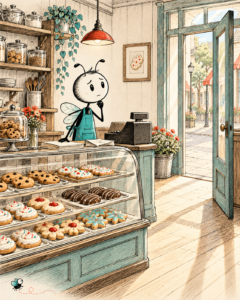
If Crumbl’s story feels familiar, it’s because a lot of us have seen this movie before. We’ve all watched the simple treat that somehow gets turned into a nationwide phenomenon, and before you know it, *poof* the treat has been relocated to some dusty corner in our local shopping plaza. We’ve had big trends like gourmet cupcakes, frozen yogurt, Nothing Bundt Cakes, and even the Cronut was catching buzz for a while. But now? These places are about as popular as Long John Silvers.
In our defense, this cycling of food trends is human. Trying something everybody’s discussing gives you a small experience to share, and food is a natural participation activity. After all, we all need to eat.
But these food trends tend to really take off and become a part of our cultural fabric when a good dose of novelty is involved. Take frozen yogurt, for example. This was a little activity that gave everyone a chance to build something of their own and oftentimes an increasingly unreasonable cup of toppings. Similarly, an extravagant cupcake became a perfectly acceptable reason to all pile in the car and go across town. Part of what you were buying was the pleasure of being involved in something other people were jazzed about too.
But there’s a key difference between enjoying that moment and wanting it indefinitely. Eventually, the food has to find its place in ordinary life, because honestly, how many of us can justify eating a single treat that clocks in at 600 calories?
And yes, the dessert can still keep selling after it stops feeling like a cultural event. You can still wander into a Nothing Bundt Cakes or a fro-yo shop, but the old hype just isn’t there anymore. No one is uploading a pic of their Cronut to Instagram these days. That’s so 2013…

So while Crumbl is having its “moment” right now, soon it will be relegated to the dark corners of sugary trends like Cinnabon and Auntie Anne’s. Unfortunately, it’s just how the cookie crumbles…
THE LANDING
America’s next dessert obsession is coming, and somebody is already signing the lease.
STAY CURIOUS
Three more stories worth your curiosity.

 How Your Tattoo Can Literally Outlive You



1 comment