🪰 Medieval Staircases Were Built TO KILL With This One Secret Design Feature
THE BUZZ
- Congratulations: the staircase may be trying to kill you.
- Your sword arm gets the worst seat in the castle.
- Historians are still fighting over whether this “secret” was deliberate.
Storming a medieval castle already seems like a terrible career choice.
But suppose you’ve somehow made it through the defenses and into the tower. Excellent work, soldier… but now, you meet the staircase.
And suddenly the castle has one more way to ruin your day.
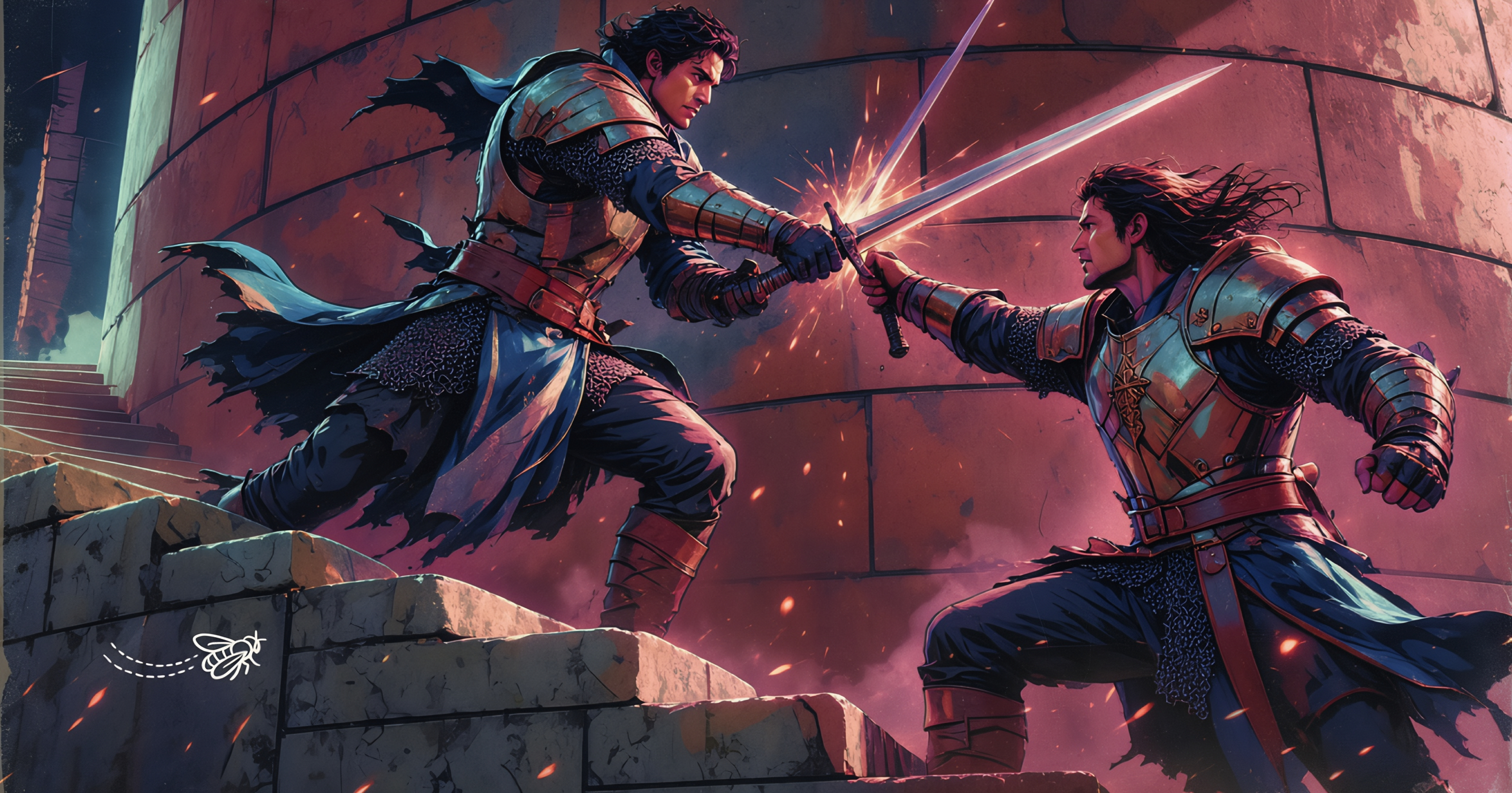
Many medieval spiral staircases climb clockwise, which puts the central stone column on the right-hand side of somebody going up. Since most fighters were right-handed, the famous explanation of this hidden secret weapon is deliciously simple: the attacker’s sword arm gets crowded against the stone while the defender coming down has lots of room to work.
Add the fact that the guy above you has the high ground and you’re trying to fight while climbing steep, narrow stone steps, and this starts feeling like a medieval meat grinder.
Honestly, I get why people love this story… castles, swords, and a trap.
The question is whether medieval builders actually meant to do this little trick, or did they just get lucky?
This staircase has a body count… allegedly
The theory has been repeated for generations because it feels so obviously clever.
A right-handed attacker climbs with the central column beside his weapon arm. The defender above him gets the wider outside edge of the staircase. If the attacker loses his footing, there are probably several of his friends directly behind him about to discover the fun part of gravity.
You don’t need an engineering degree to see why that would be useful, right?
There’s even a famous Scottish twist involving Ferniehirst Castle and the Kerr family, who were supposedly so unusually left-handed that they built their staircase the opposite way to flip the advantage.
It’s a fantastic story.
This video explains how the whole thing supposedly worked, then starts poking some inconvenient holes in it.
Okay, so I’m not tossing the medieval death staircase in the moat just yet.
The basic idea that a cramped spiral stairway would be a miserable place for an attacker is perfectly sensible. What gets shakier is the much more specific claim that medieval builders deliberately chose clockwise stairs everywhere to screw with right-handed swordsmen.
Buildings archaeologist James Wright has spent years digging into this, and surviving castles refuse to cooperate with this fun little rule. That’s because a large number of medieval spiral staircases actually turn the other way. And some castles have both orientations, which would be a strange choice if the direction of the stairs were considered this critical combat feature.
Then there’s the size problem… yes, size matters.
Wright talks about a staircase at Goodrich Castle that’s only about 0.7 meters wide.
Try swinging a longsword in that cozy little nook.
Hell, try scratching your elbow, and let me know how it goes.
At that point the staircase is doing most of the defensive work. Think about it… you’ve got an attacker squeezed into a stone tube trying to move uphill toward somebody who already knows he’s coming.
Whether his sword arm has four extra inches of room suddenly feels like the least of his problems.
Wait… nobody wrote this down until 1902?
Here’s where the story gets properly weird.
The earliest written version of the famous sword-hand “hidden trick” explanation that Wright’s been able to trace doesn’t come from some medieval architect leaving notes on a half-burned parchment.
It shows up in 1902. That’s when Theodore Roosevelt rode in the first in an automobile.
The man behind the claim was Sir Theodore Andrea Cook, an English writer and art critic who also happened to be really into fencing. Cook looked at spiral architecture through the eyes of a swordsman and came up with the theory that the direction of the stairs gave one fighter an advantage over another.
Now, sure, maybe some medieval builder thought, “Hey, this could make life unpleasant for the guy charging upstairs.”
But there’s a big difference between saying “this design could help defenders” and saying “medieval builders deliberately turned staircases clockwise to screw with right-handed attackers.”
That second claim is the part historians have trouble proving.
Like I said, there’s no known medieval building manual telling masons to turn the staircase “that way” so Sir Invades-a-Lot smashes his sword into the center post.
The explanation may simply be a very good idea somebody came up with centuries later.
Which is kinda irritating, because it really does make sense, and it’s a fun story.
Either way, fighting in a castle would absolutely suck
This is the part I refuse to let the debunkers ruin.
Imagine climbing one of these things during an actual fight.
The staircase is steep enough that you need to pay attention to your feet, but there’s somebody above you who would very much like to put something sharp through your face.
You also can’t see far around the curve.
And good luck bringing twenty of your closest buddies with you. The narrow stairs naturally funnel attackers into a much smaller space, which means the castle has taken your nice large invading force and turned it into a really long queue.
Medieval castle builders absolutely did design structures to make attacking a miserable experience. Gatehouses became fortified traps, walls gave defenders protected firing positions, and towers were built to improve their field of fire.
So maybe the spiral staircase didn’t need some secret sword-arm trick, after all.
It was already really awful.
Since we’re inside, the bathroom situation is horrifying too
The staircase also tells us something that gets lost when we treat castles like giant medieval weapons.
People lived in these cold, damp things.
Which means once you stop looking for sword fights, you start noticing some other design choices.
Like the toilet.
Castle latrines were known as garderobes, and in many cases the basic technology amounted to a hole connected to a chute and more “gravity” fun.
Waste would plop its way outside the wall or into a pit below, depending on the castle. And yes, clothing was sometimes kept around garderobes because the smell was so bad, people thought bugs would avoid it like the plague (pun intended).
Imagine being rich enough to live in a castle and still having somebody tell you the safest place for your clothes is beside the gross, poppy toilet.
That’s a very unfortunate kind of luxury.
And centuries later, archaeologists digging through a garderobe at Dudley Castle found something absolutely magnificent: fragments from ten animal-membrane condoms. Sorry, I know this is a family show…
Anyway, five appeared to have been used. Another five were nested together and apparently unused.
They date to the castle’s 17th-century occupation, so technically they’re post-medieval rather than medieval, but I’m sorry, you cannot tell me archaeologists found a 1600s condom stash in a castle toilet and expect Intelligent Fly to walk calmly past it. Ain’t gonna happen.
History occasionally rewards us.
The really terrifying castle feature was boring
For all the clever architecture built around war, one of the fastest ways to make life inside a castle unbearable had nothing to do with sword angles.
The real weak point was the water supply. A castle could have walls thick enough to chuckle at a battering ram and still be completely screwed if the well went bad. Attackers knew that, which is why poisoning or contaminating the water was such a go-to move. Sometimes that meant tossing a decomposing body straight into the well.
Imagine lowering the bucket for a drink and pulling up water with somebody’s spleen floating in it.
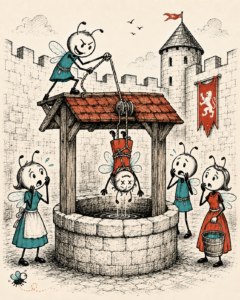
Yeah. I think I’ll stay thirsty.
But as you can see, getting through the front gate wasn’t the only way to bring a castle down.
Nobody needed to stage a bloody duel halfway up the spiral staircase if thirst and sickness were already doing the job downstairs.
Still, I understand why the staircase story refuses to die.
It’s too good.
The attacker comes charging upward with his sword pinned awkwardly beside the central column. The defender is above him, waiting around the bend.
Maybe medieval builders planned every inch of that advantage.
Maybe later generations looked at an already-brutal staircase and gave it a clever explanation.
Either way, I know which guy I’d rather be…
The one going down.
THE LANDING
Clockwise myth or not, if the castle made you fight uphill on a staircase, the staircase had already picked a side.
STAY CURIOUS
Three more stories worth your curiosity.







Post Comment