🪰 Here’s What Will Likely Happen Three Days Before You Die…
THE BUZZ
- The dead come back to visit.
- Dementia patients suddenly “come back.”
- Science is still trying to catch it in the act.
There are some things human beings have been reporting for so long that eventually science has to stop rolling its eyes and at least ask what the hell is going on.
This is one of those times.
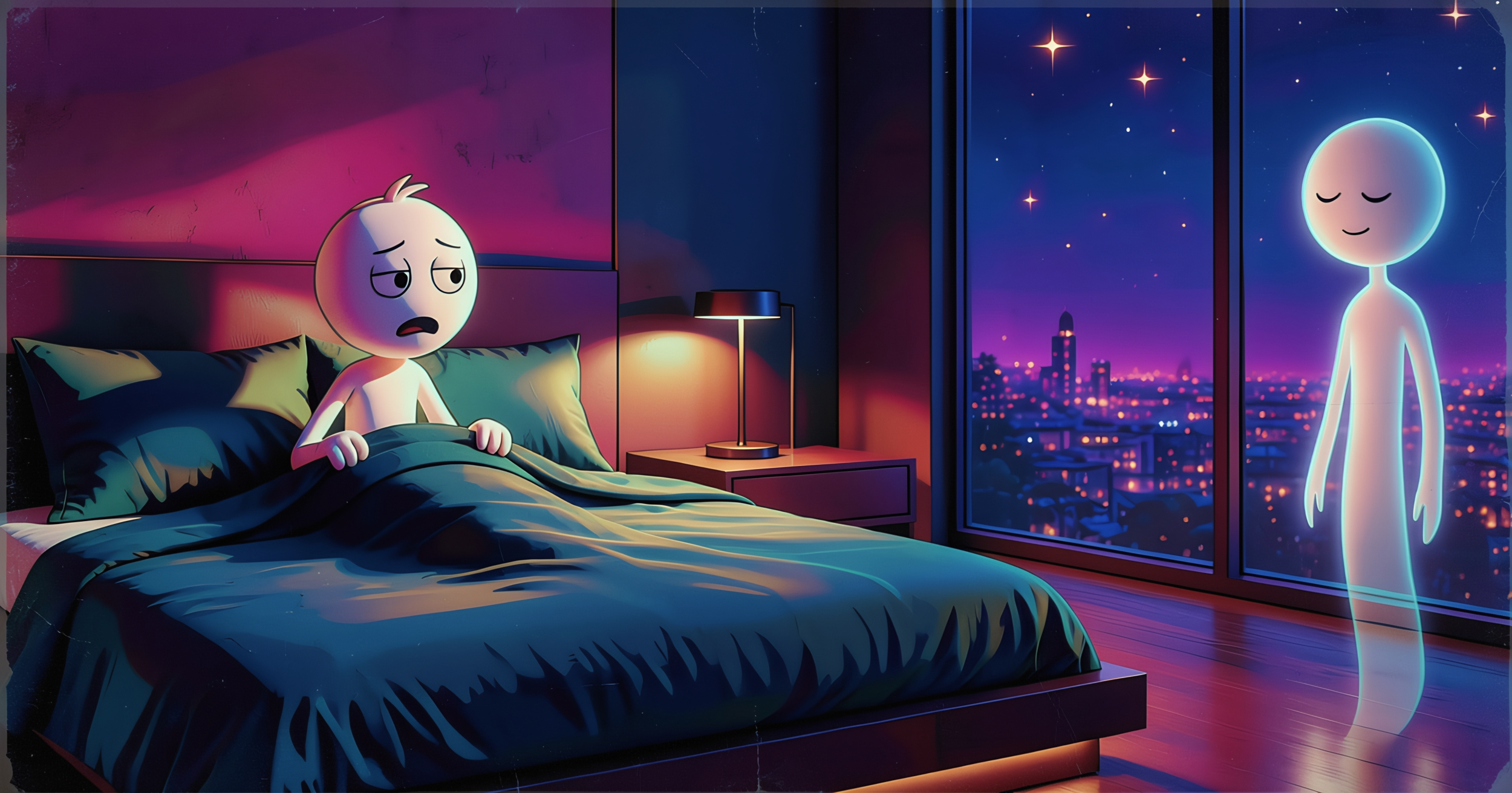
In the final stretch of life, around the final 3 days or so, quite a few of us start talking to people nobody else can see.
And it’s not random people, either.
Maybe it’s a mother who died 30 years ago, or a husband who went first, a childhood friend, or a beloved grandparent.
Even pets sometimes make the guest list.
And most of the time, the dying person doesn’t seem frightened or confused by any of it. Quite the opposite, actually. They may recognize whoever they’re seeing right off the bat, speak with them like it’s no big deal, and come away from the experience totally relaxed and comforted.
Then there’s another strange phenomenon that scientists see happen with the dying.
Someone with advanced dementia who hasn’t recognized her daughter in eons suddenly says her name. It’s like they snap back into reality. All of a sudden a person who’s barely spoken starts talking clear as day. Someone who seemed completely gone suddenly looks, talks, jokes, or remembers like the person their family thought they’d lost.
Sometimes it lasts minutes. Sometimes hours… and then they fade again.
Now, if this sounds a little woo-woo, I get it.
But hospice doctors, dementia researchers, neurologists, and major medical institutions are studying these things right now, because whatever they are, people keep reporting them, over and over, and over again.
And science still doesn’t have a neat and tidy little answer for whatever this is.
The clip that sent me down this particular rabbit hole claims something especially creepy. It’s the “3 day rule.” The story goes that about three days before death is when many people start seeing someone who’s already died.
And it goes way deeper from there.
Okay.
First things first…
That video is fascinating, but the three-day countdown isn’t settled science. There isn’t some known biological alarm clock buried in your skull that starts flashing 72 HOURS REMAINING.
Death doesn’t follow a Google Calendar.
End-of-life dreams and visions have been reported hours, days, weeks, and even months before death. What research does suggest is that they can become more frequent as death gets closer, particularly visions involving people the patient loved and lost.
And that brings us to Dr. Christopher Kerr.
The hospice doctor who asked one simple question
Kerr is a physician and neurobiologist who runs Hospice and Palliative Care Buffalo in New York.
Back in 2011, instead of just brushing off what dying patients were describing as dreams, confusion, medication, or somebody’s grandmother getting mystical at the finish line, Kerr and his colleagues started interviewing hospice patients about what they were actually experiencing.
Their 2014 study included 59 patients and 453 interviews. Fifty-two of those 59 patients, or about 88 percent, reported at least one dream or vision that felt extremely vivid and real.
That’s a big number.
“ELDVs are commonly experienced phenomena during the dying process, characterized by a consistent sense of realism and marked emotional significance.”
Patients dreamed or had visions involving both living and dead loved ones, past experiences, travel, religious figures, and pets. But as death got closer, visions involving the deceased became more common, and those tended to be among the most comforting experiences patients reported.
Kerr explained it this way…
“As our study participants got closer to death, they tended to focus on the people they have loved and lost.”
That’s way more interesting than just saying, “dying people hallucinate.”
Because these experiences seem to have a theme here…
The people who mattered come back, and the dying person feels reassured.
And strangely often, somebody is getting ready to go somewhere… this is where it gets kinda creepy.
Apparently, everybody is packing
One of the eeriest details in the research is how often travel pops up. Patients talk about leaving, preparing for a trip, waiting to be picked up, going somewhere, or seeing somebody who seems to have arrived to accompany them somewhere.
The Hospice Foundation of America actually includes this sort of thing in its information for families about what may happen near death. That’s how much it happens.
Hospice Foundation of America:
“They may talk about taking a trip or activities related to travel, such as packing a suitcase or getting on a plane.”
Now, does that mean Grandpa is waiting for an Uber to the afterlife?
Science can’t tell us that.
But apparently Grandpa talking about packing his bags isn’t unusual. A ton of people are packing for a similar trip.
And there’s another important wrinkle here.
Is it just delirium?
That’s obviously one of the first explanations people reach for, right?
The body is shutting down, medications are involved, and oxygen levels can change. And then there’s infection, organ failure, dehydration, and metabolic changes that can affect the brain near death and can absolutely produce confusion, delirium, or hallucinations.
But Kerr’s research tried specifically to separate those patients from the ones they were studying.
Participants were assessed for delirium, and patients who were cognitively compromised in ways suggesting delirium weren’t included in the research. Kerr has described the end-of-life experiences his team studies as much more organized, personally meaningful, and clearly remembered than typical delirium.
That doesn’t prove Grandma actually saw Grandpa, but it does mean simply waving all of this away with “dying brain goes bonkers” doesn’t fully explain what researchers are seeing.
And then things get even weirder…
Because sometimes the person doesn’t see somebody else come back… it’s them who returns.
When someone with dementia suddenly seems like themselves again
There’s a name for this. It’s called terminal lucidity.
Or, if it’s not clearly tied to imminent death, it’s called paradoxical lucidity.
This is when someone with severe neurological decline, particularly dementia, suddenly, totally out of nowhere, regains abilities or awareness that seemed to be gone.
They may recognize somebody, remember an old story, speak like normal, ask for food, sing, or crack jokes. You get the picture.
Basically, for this one strange little window, the person their family remembers comes back to life.
“Terminal lucidity, or ‘the surge,’ is an unexpected episode (occurrence) of clarity and energy before death.”
And no, it doesn’t usually mean somebody’s getting better.
That’s what makes this part heartbreaking.
Families can understandably see Mom sitting up, talking, eating, or recognizing everybody and think she’s suddenly turned a corner.
But it’s usually not a corner. It’s a window.
Cleveland Clinic says these episodes can last anywhere from minutes to hours and often occur during the last days or weeks of life.
And researchers recently got a much better look at how common these episodes are.
151 dementia patients. 267 lucid episodes.
A 2025 multi-site prospective study involving NYU Langone, VNS Health, and Bellevue followed people with moderate to severe dementia by having caregivers document unexpected periods of mental clarity.
The researchers enrolled 151 patients.
What happened shocked everybody.
“Of 151, 93 (61.6%) reported lucidity, with 267 distinct events that were consistent with reality.”
That’s 93 out of 151.
The events included appropriate awareness of what was happening around them, old memories resurfacing, recovered abilities, and nonverbal communication.
Now, not to be a buzzkill, but it’s important to note that these were caregiver-reported events, not 267 moments caught on brain scanners proving that a damaged brain magically rebuilt itself.
But 267 documented episodes is still enough to make researchers very interested in figuring out what’s going on.
Because if a person appears to have lost access to certain memories or abilities and then suddenly gets them back again, even for a few minutes, that raises one hell of a question.
Where were they?
And this is where the brain gets seriously weird
You’ve probably heard the idea that the brain simply shuts down as oxygen disappears, right?
Turns out, at least in a few dying brains scientists have actually been able to monitor, things may not be quite that cut and dry.
In a 2023 University of Michigan study, researchers examined EEG recordings from four comatose patients who died after cardiac arrest while being monitored.
After their ventilator was removed, two of the four showed a rapid surge in gamma-wave activity, including activity in a part of the brain researchers associate with conscious processing, dreaming, visual experiences, and other complex brain functions.
This is the part where everybody wants to leap directly to AHA! AFTERLIFE!
But easy there, Ghostbusters.
Four patients is a really small study, and none of them survived to tell researchers whether they really experienced anything at all.
A burst of brain activity isn’t proof of consciousness or proof that dead Aunt Betty was standing by the bed, chit-chatting.
The researchers describe the findings as intriguing early evidence.
But it does make the old picture of the dying brain simply flickering quietly into darkness a little more complicated.
And scientists now want to catch one of these lucid episodes while the person experiencing it is actually hooked up to something.
So they’re putting EEGs in people’s homes
This is the part I find absolutely fascinating.
Sam Parnia and researchers at NYU Langone are conducting an NIH-backed project involving roughly 500 terminally ill people with dementia who have a life expectancy of a week or less.
Instead of hoping somebody happens to be in a hospital EEG lab when lucidity suddenly appears, they’re bringing the equipment to the patients.
Researchers plan to use in-home video EEG, recording electrical brain activity along with audio and video, while caregivers document anything that looks like an episode of lucidity.
“How do you have lucidity at a time when the brain is assumed to not be functioning?”
The researchers want to know whether anything measurable changes in the brain immediately before, during, or after these moments.
For once, science may actually be sitting there with the camera rolling when Grandma suddenly recognizes everybody again.
What those recordings will eventually show is anybody’s guess.
So what happens three days before you die?
Maybe nothing on this list I shared with you.
That’s the part TikTok leaves out.
There is no universal three-day rule. Some people have end-of-life dreams weeks earlier. Some have them hours before death. Some never report one. Some experience lucidity. Many do not. The dying process varies enormously from person to person. It’s personal.
But buried underneath the dramatic “three days” hook is something so much more interesting than just some death countdown.
Dying people really do report remarkably vivid dreams and visions. Deceased loved ones show up with surprising frequency. Travel and departure are recurring themes. Some people with severe dementia unexpectedly regain flashes of memory, recognition, or personality.
And scientists still don’t fully understand why.
Maybe someday there will be a clean neurological explanation for all of it.
But for now, science is doing the only useful thing it can do.
It’s finally paying attention.
THE LANDING
Maybe the strangest thing about dying is that, just before the mind goes quiet, love sometimes gets the last word.









6 comments