🪰 The 3-Ingredient Farm Suppers Nobody Makes Anymore
THE BUZZ
- Three ingredients once fed an entire farmhouse
- Supper started in the cellar, not the store
- Somehow, we lost the recipes and the rhythm
When “What’s for Dinner?” Had a Much Simpler Answer
I think most of us have done this… you open the fridge packed with food, stare into it for a while, wander over to the pantry, inspect another small fortune in boxes and jars, and finally announce that there’s nothing to eat!
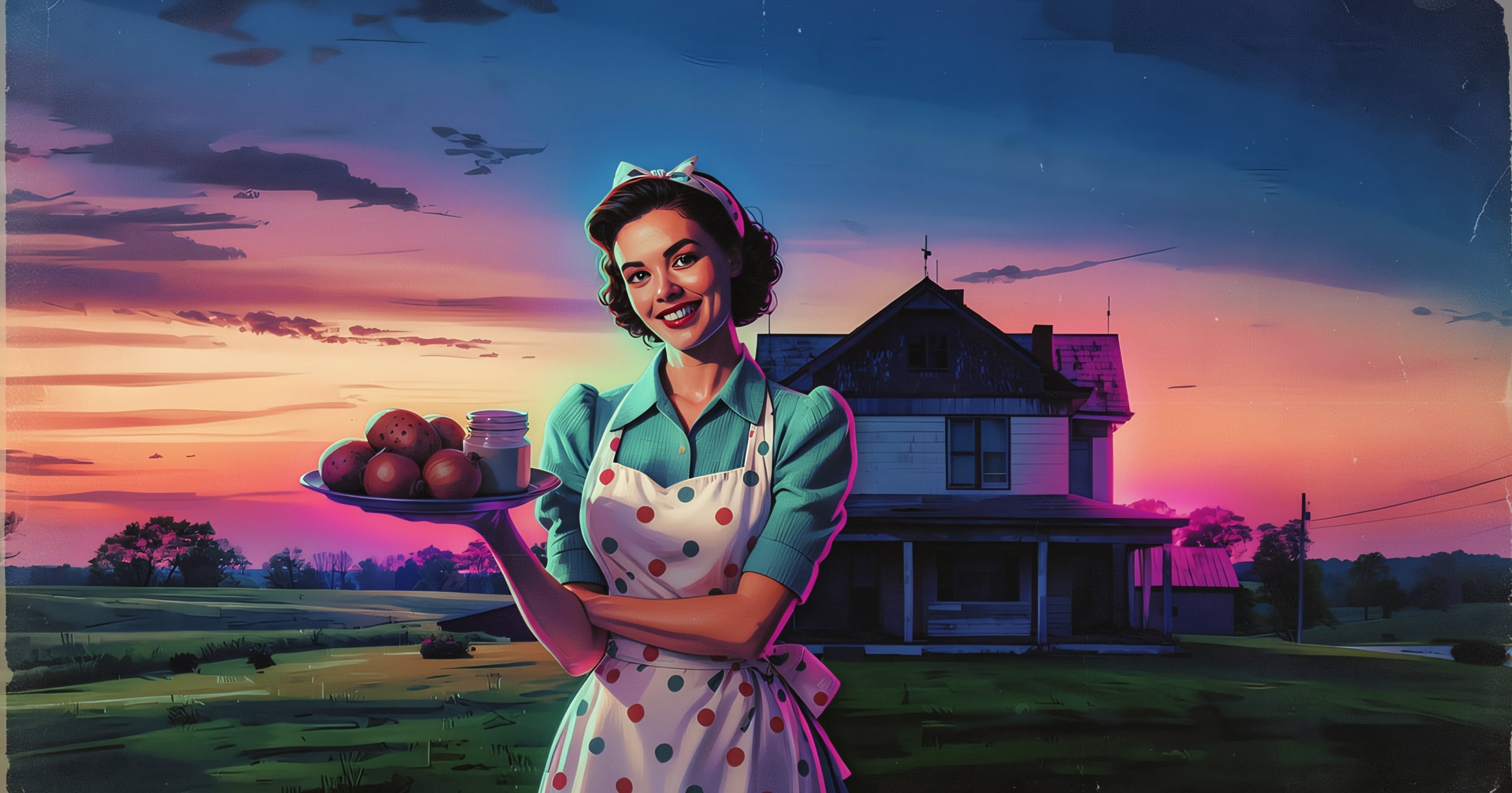
Meanwhile, somewhere in an old farmhouse kitchen, a woman was looking at four potatoes, an onion hanging from a braid, and the grease left in yesterday’s skillet and thinking, Perfect supper!
That’s the world this first video dropped me into, and I couldn’t stop watching… I was hooked.
These weren’t “three-ingredient meals” in the modern internet sense, where somebody promises an effortless recipe and then quietly assumes you already own twelve specialty condiments. These were suppers built around three basic things because those were the things the farm had on hand.
Potatoes. Milk. Eggs. Corn. Bread that was starting to go stale. Tomatoes that needed using before the frost got them.
Nothing glamorous. Nothing photographed on a marble countertop.
But people ate pretty damn good.
Supper Was Whatever the Farm Handed You
The man telling these stories grew up on a 160-acre Iowa farm in a family of eleven, and the thing I love about his memories is that he doesn’t turn the past into some sepia-toned fantasy.
Some meals were favorites. Others showed up because payday was still a week away.
But that part made this whole story even better.
Fried potatoes and onions were made with cold potatoes from the night before, sliced into a hot skillet with onion and bacon grease. The trick wasn’t some secret ingredient. His mother just knew enough to leave the potatoes alone until the bottoms developed that delicious deep brown crust. Meanwhile, the rest of us stand there with a fork poking at them every twelve seconds and wonder why we get a plate of mush.
And the the corn fritters… those happened when sweet corn was coming out of the garden faster than anyone could eat it. A little egg and flour held it together, and dinner was served.
When the fall weather rolled in and green tomatoes were still hanging on the vines, nobody stood around cursing the ones that wouldn’t ripen. They sliced them, pressed them into cornmeal, and fried them up, golden and crunchy.
Even stale bread had a purpose. Feeling sick? Don’t worry, there was milk toast for that. And bread pudding if she wanted the house to smell like something really special was going down.
And then there’s the famous water pie, which sounds like a really bad prank somebody played during the Depression.
But it wasn’t.
The video describes this pie made when the company was coming over and the kitchen had almost nothing left to offer. Somehow water, flour, and sugar became dessert because sending a guest home without putting something sweet on the table was a cardinal sin.
I’m not going to spoil all 25, because half the fun is hearing the stories attached to each recipe. But by the time he gets to the glass of cold cornbread and buttermilk his father ate after milking, you’ll be ready to sell your house and buy a farm.
These people were amazing and resilient. They weren’t constantly asking, What recipe should I make tonight?
They looked around and cooked what was there.
Watch this one when you’ve got a little time. It’s long, but it has the cozy rhythm of sitting at somebody’s kitchen table while they tell you how people used to eat.
And one part of his story really stuck with me.
Over the course of a generation, the farm changed. The cows, hogs, hens, garden and orchard gradually gave way to a more specialized operation built around crops headed to market. The farm might’ve become a more efficient business, but suddenly the family producing food for a living was driving into town to buy its own supper.
That’s a helluva shift.
Because once the food stopped being right outside the kitchen door, a whole style of cooking slowly went away with it, and that really sucks.
Grandma Didn’t Have a Meal Plan. She Had a Rhythm.
That’s what made the next video such a good companion to the first… Yes, as you can tell, I went down a farm rabbit hole.
This next story comes from a modern farmhouse with a family of ten, and the meals are obviously different. There’s sourdough, homemade mayo, pizza, pork chops, and a kitchen full of equipment the ladies making water pies didn’t have.
But honestly, the basic instinct feels the same.
The day begins with a very farm-specific problem: too many eggs.
Not “What trendy toast should I make?” 🙄
More like, “I have chickens absolutely burying me in eggs. How do I get eighteen of these things into my family before 9 a.m.?”
In case you’re wondering, the answer is sourdough crepes.
Later on, there’s bread moving through various stages of fermentation, hard-boiled eggs waiting for another use, meat thawing in the refrigerator, vegetables available, and sourdough starter bubbling away for pizza night.
The woman cooking explains that she doesn’t really plan meals in the strict sense. She keeps ingredients and processes moving, then looks at what is ready to fire off and builds the meal from there.
I loved that because it’s basically the old farm-kitchen idea but wearing more modern clothes.
Here’s what that looks like over the course of a day:
She ends up serving pork chops with mashed potatoes and a cream sauce for lunch because those happen to be the ingredients ready to go. Dinner becomes sourdough pizza because the starter is active and pizza will feed everybody without turning the evening into a cook-off.
There’s no panic over missing Taco Tuesday.
And her kitchen is alive.
Something is rising, something is thawing, eggs need using, bread is cooling, and dinner eventually emerges from whatever happens to be ready to roll.
That feels a lot closer to those old three-ingredient suppers than I expected.
And Then There’s the Kid Who Actually Knows Where Dinner Came From
The last video I watched takes the story somewhere I really liked because this time we’re following a 16-year-old girl growing up on a small farm.
Her day has social media and schoolwork in it, so nobody needs to picture Little House on the Prairie here.
But it also involves feeding horses, being harassed by a duck, hunting for kittens in a barn, checking on newborn piglets, walking the dog, and grabbing food from the garden before she makes dinner for her family.
That’s a very different teenage existence from “Mom, there’s nothing to eat,” while standing six feet from a refrigerator packed with processed food.
For dinner she makes BLTs, caprese salad, and applesauce. The sourdough bread was made at home, the tomatoes came from the garden, and the bacon… well, that came from cute little pigs the family raised.
And there’s one moment in the video where she talks about how satisfying it is to eat something you’ve actually grown and worked for.
For me, that’s was the whole story right there.
What I found charming about her day wasn’t that farm life exists outside the modern world. It clearly doesn’t, because she’s filming content, doing schoolwork, and living like a pretty average teenager in 2026.
But she also knows which horse needs its feed soaked, where tonight’s tomatoes came from, and what went into putting the bacon on her sandwich.
Food isn’t this mysterious finished object that appears in plastic under fluorescent lights for this girl. She knows its backstory.
And once you’ve watched all three videos together, the connection between them is strong.
Maybe We Forgot How to Start With What We Have
I don’t want to romanticize a farmhouse kitchen where eleven people occasionally ate milk toast because money was tight. And I’m also not trading my dishwasher for a washboard and declaring electricity a moral failure anytime soon.
But those old cooks knew something incredibly useful that a lot of us have forgot.
They knew ingredients.
Give them potatoes, milk, and an onion, and they didn’t need Google to explain what dinner could become. Stale bread still had a purpose, and if the garden was suddenly drowning them in something, well, guess what everybody was eating for the next few days.
You had to be sharp and think on your feet. And the best part was that if you mastered a few techniques, you could stop following instructions and start cooking for your family.
And maybe that’s the part worth bringing back.
Supper Doesn’t Have to Be a Production
Nobody needs 160 acres and a milk cow to steal something useful from these farm kitchens.
Maybe it’s just looking in the refrigerator before looking at a recipe.
Maybe those potatoes become supper instead of sitting there until they start growing one hundred eyes and an ecosystem. And hey, maybe the loaf of bread that went stale yesterday turns into something warm and cozy tonight.
The old farm table wasn’t always fancy, and sometimes the meals came from necessity. But there’s something deeply satisfying about food that solves the problem in front of you without requiring another shopping trip.
Three ingredients.
Hot skillet.
Everybody fed.
There are worse ways to run a kitchen.
THE LANDING
Maybe the old farm supper wasn’t about having less. Maybe it was about knowing exactly what to do with what you had.
STAY CURIOUS
Three more stories worth your curiosity.




Post Comment